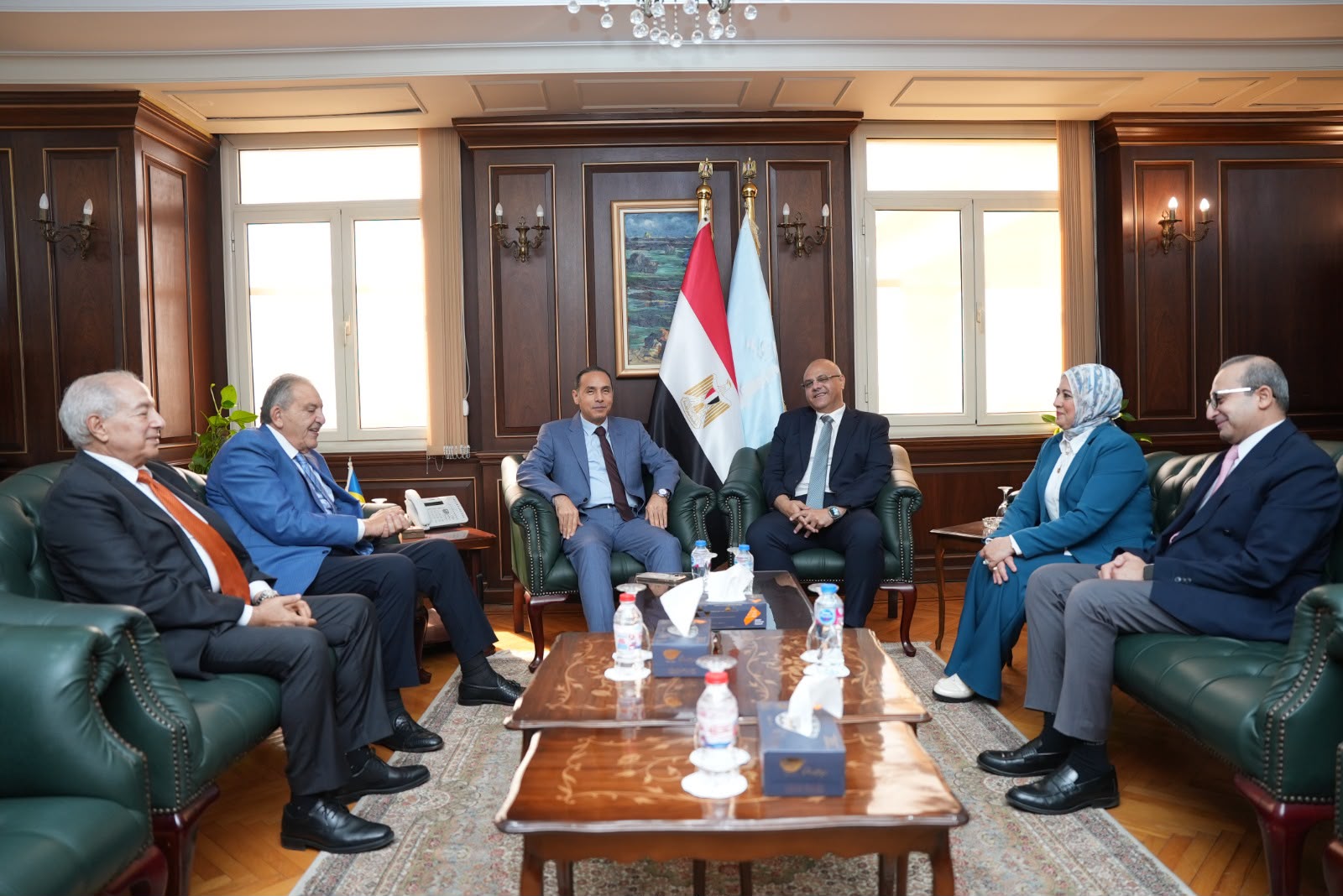
- Alexandria Governor Eng. Ayman Attia hosted FRA Chairman Dr. Islam Azzam to review non-banking financial sector developments.
- Islam Azzam met with investors, corporate reps and syndicates to discuss sector challenges and boost local financial awareness.
- FRA Chairman highlighted the role of investment funds, government offerings, derivatives, short selling and market makers.
- Open discussions on FRA’s decisions to enhance capital markets, insurance and non-bank financing while protecting participants.
Dr. Islam Azzam, FRA Chairman visited Alexandria Governorate headquarters on Thursday for an open dialogue with members of parliament, business leaders, chamber of commerce representatives, Federations and syndicates. The meeting explored ways to expand and deepen non-banking financial activities in the governorate, unlock growth opportunities, and foster innovation and entrepreneurship, while addressing key market challenges and potential solutions.
The high-level meeting was hosted by Alexandria Governor Eng. Ayman Attia as part of “Building Capacity, Driving Development – Know to Benefit” conference. Organized under the auspices of Prime Minister Dr. Moustafa Madbouly, the conference aims to raise awareness of FRA-regulated activities and maximize economic benefits for businesses and citizens.
Key attendees included Dr. Amira Yassin Haikal, Deputy Governor of Alexandria and Dr. Tarek Seif, FRA Vice Chairman. In addition to Dr. Mohamed Abdel Aziz, Mr. Mahmoud Gebril and Dr. Rehab Taha, Assistants to FRA Chairman; Counselor Reda Abdel Moati, Senior Advisor to FRA; a number of FRA leaders specializing in the supervision of various activities; heads of all non-banking financial activity federations; and representatives of prominent sector companies and federations, particularly those operating in Alexandria .
Governor Ayman Attia welcomed Dr. Islam Azzam and FRA delegation, stressing the importance of boosting financial literacy and connecting local enterprises and youth with innovative non-banking financing and investment opportunities.
He noted that Alexandria’s diverse industrial, commercial and economic base makes it an ideal hub for expanding innovative financial services, particularly to support small and medium-sized enterprises (SMEs) in scaling up and generating jobs.
On the other hand, Dr. Islam Azzam outlined recent regulatory developments in capital markets, investment funds, and the implementation pipeline for upcoming government and private offerings to expand base of listed companies and boost institutional investment.
He also announced that short-selling mechanism (borrowing securities for sale) will officially launch within weeks. Following live testing of the central lending system, technical integration between Misr for Clearing, Settlement and Depository (MCDR) and brokerage firms, and pilot training, the mechanism operates under FRA Board Decision No. 155 of 2026, adhering to strict transparency, governance and investor protection standards.
He noted that this step comes as part of efforts to develop capital market tools, following the launch of derivatives market last March and the rollout of futures contracts on a number of blue-chip stocks, which contributes to enhancing pricing efficiency, increasing liquidity and providing diverse investment alternatives for market participants.

FRA Chairman also reviewed the upcoming market maker mechanism and its role in boosting trading activity and liquidity, supported by the stamp duty exemption introduced in the recent tax package. He noted that the authority is examining additional incentives to encourage institutional investments, alongside plans for listing and offering major state-owned companies on the stock exchange.
Regarding non-banking finance, Dr. Islam Azzam outlined efforts to develop responsible financing rules, including enhancing reliance on behavioral analysis-based scoring alongside credit inquiries, studying cash flows, and calculating debt service burdens to mitigate risks of multiple borrowings, default, and fraud. He pointed out that financing entities are now mandated to use a One-Time Password (OTP) to verify that clients are fully aware of and consent to financing operations, in accordance with FRA Decision No. 133 of 2026, which is scheduled to take effect before 11th November. This is in addition to Decision No. 27 of 2026 regarding insurance coverage for microfinance clients, the ban on consumer finance for purchasing gold, precious jewelry, and other precious metals, and requiring companies to prepare for full integration with FRA’s database to enhance early risk detection.
FRA Chairman shed light on ongoing preparations to implement “Basel III” standards across the non-banking finance sector starting next January. This initiative aims to expand risk management scope to encompass market and operational risks alongside credit risk. He explained that the authority is actively preparing companies and familiarizing them with implementation requirements through awareness programs detailing execution mechanisms, noting that several companies have already begun trial implementation in anticipation of the deadline.

As part of enhancing regulation and protecting clients, Dr. Islam Azzam revealed that a package of regulatory and technological measures is currently under study. These include expanding the use of artificial intelligence (AI) for data analysis and indicator extraction, developing early risk-monitoring mechanisms, and establishing a centralized anti-fraud system to facilitate the exchange of fraud-related information across different sectors. Additional measures involve digitizing administrative procedures, strengthening identity verification tools and regulating debt collection activities to limit violations.
FRA Chairman highlighted ongoing procedures to complete electronic integration with regulated companies. This system will supply daily, real-time data across various non-banking financial activities for analysis using AI technologies, with a portion of these analytical insights shared with the market to help companies make more efficient decisions and develop insurance and financing products tailored to actual client needs.
Regarding the insurance sector, he stressed the importance of providing complete information to clients regarding insurance products, financing options, and investment vehicles, while clearly outlining their rights and obligations, safeguarding their data, and providing effective grievance and complaint mechanisms as foundational pillars for developing activities and building market confidence.
He also underscored the need to encourage the innovation of new products using financial technology and to expand access to services, particularly in remote and underserved areas, running parallel with ongoing awareness campaigns and cooperation with various government entities.

The meeting addressed the importance of raising awareness about secure investment channels regulated by FRA—most notably diversified investment funds and digital platforms dedicated to real estate investment funds—as well as the geopolitical challenges affecting stock market performance and state efforts to absorb them to ensure market stability and enhance attractiveness. Discussions also covered ongoing coordination with the Ministry of Finance and the Egyptian Exchange (EGX) to build trust between the tax administration and the business community, alongside the anticipated positive impacts of the recent tax facilitation package.
“Building Capacity, Driving Development” conference in Alexandria reflect the Financial Regulatory Authority’s commitment to strengthening communication with state institutions and business representatives across governorates. It also underscores efforts to develop non-banking financial markets in a way that balances supporting growth and investment, elevating service quality, protecting client rights and maximizing the sector’s contribution to the national economy.
Tags: Financial Regulatory Authority (FRA), Dr. Islam Azzam - FRA Chairman, " Building Capacity, Driving Development" Conference, Alexandria Governorate Last modified: October 18, 2026