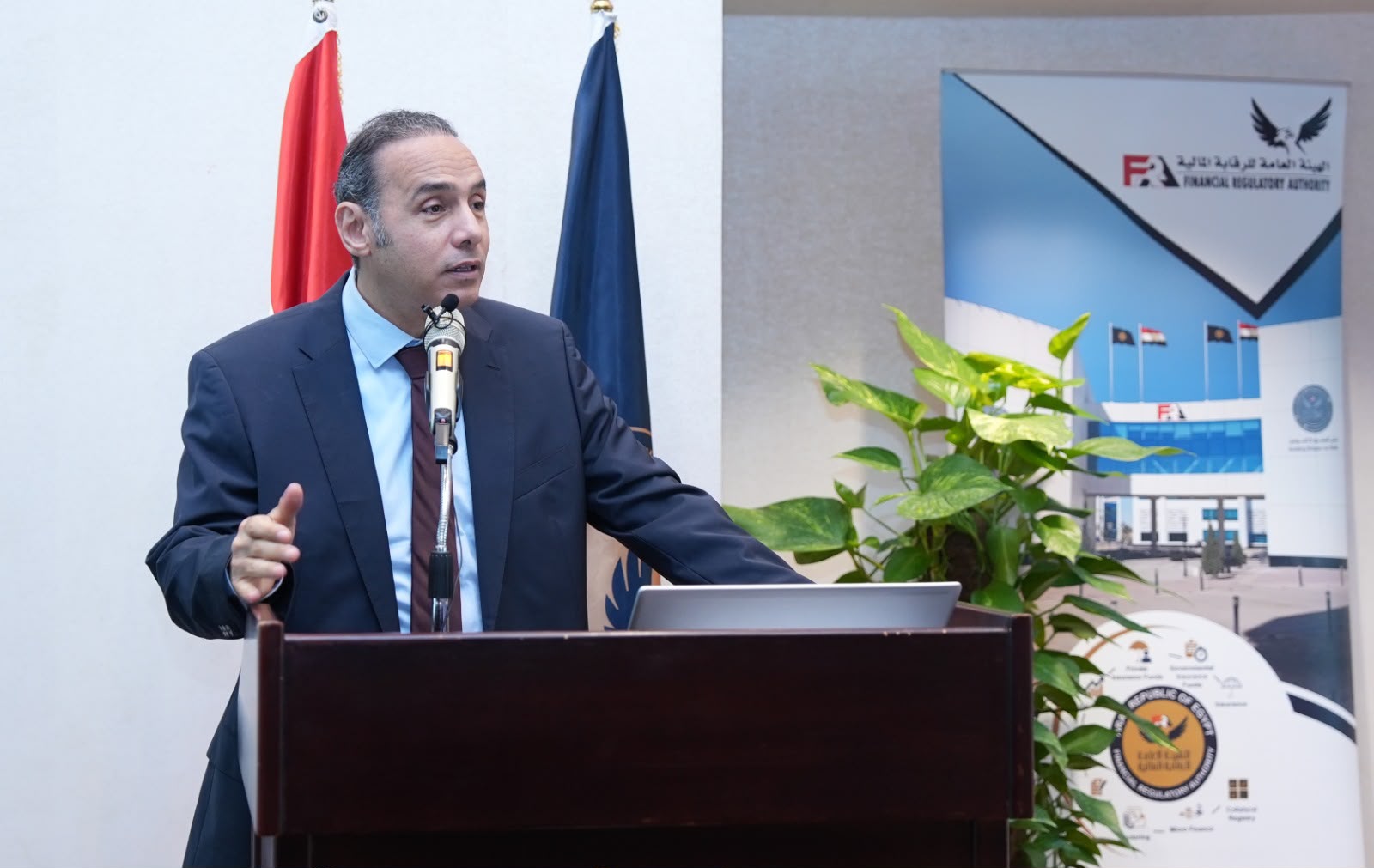
Dr. Islam Azzam, FRA Chairman:
- Coordinating efforts with the Healthcare Authority opens new horizons for innovative products and services, while driving the adoption of FinTech and InsurTech in healthcare management.
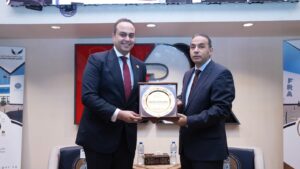
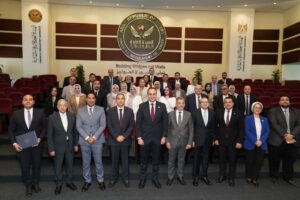
Dr. Islam Azzam, FRA Chairman and Dr. Ahmed El-Sobky, Chairman of Egypt Healthcare Authority and General Supervisor of the Universal Health Insurance System, attended the closing ceremony of a training program organized by FRA for 30 healthcare executives. The program comes as part of the implementation of the Memorandum of Understanding (MoU) signed between the two parties last May, aimed at enhancing cooperation, exchanging expertise and supporting the development of the healthcare ecosystem by leveraging the capacities and tools of the non-banking financial sector.
The training program was organized through the Financial Services Institute (FSI), FRA training arm, to build the capacity of Healthcare Authority cadres and enhance their proficiency in handling non-banking financial activities relevant to the health sector. The curriculum covered specialized topics in medical insurance, including claims management, pre-authorizations, chronic care management, medical networks, underwriting and pricing methodologies, cost containment, and fraud detection and prevention. It also addressed the legislative and regulatory framework governing medical insurance under the Unified Insurance Law No. 155 of 2024.
Dr. Islam Azzam emphasized that this training program represents the initial practical deliverable of the MoU, noting that the partnership aims to construct an integrated framework supporting healthcare development. He highlighted that it fosters integration between medical and economic activities through the development of innovative products and services, alongside the deployment of financial and insurance technology (InsurTech) in healthcare management to streamline access across the Universal Health Insurance System and other healthcare delivery all over Egypt.
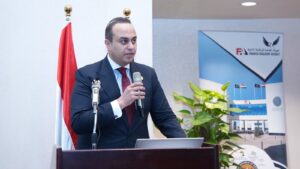
Dr. Islam Azzam pointed out that this integration enhances healthcare service quality, strengthens the medical sector’s sustainability and governance and elevates its attractiveness for local and foreign investment. He stressed that healthcare represents one of the most promising investment sectors globally and regionally, doubling the imperative to utilize financing, insurance, investment tools, and modern technologies in its advancement.
He added that the rapid global surge in healthtech and medical service investments—which grew by over 40% in 2025—was driven by market demand, technological advances and the expanding use of artificial intelligence and data analytics. This growth serves as a strong catalyst to accelerate the MoU’s implementation and expand joint initiatives to boost the competitiveness of Egypt’s healthcare sector and elevate its overall quality and efficiency.
In his address, Dr. Ahmed El-Sobky expressed his appreciation for FRA’s efforts in updating regulatory frameworks and capital market legislations. He extended his gratitude to the FSI for organizing the training program, describing it as a key milestone in the partnership. He noted that qualifying 30 trainees in pricing, underwriting, and healthcare-related capital market instruments represents a vital investment in human capital, creating specialized cadres capable of applying this knowledge to optimize operations.
He emphasized that the success and expansion of the Universal Health Insurance System open vast horizons for health sector investment. He underscored the importance of maximizing the benefits of capital markets and non-banking financial instruments—including specialized healthcare investment funds—alongside leveraging technology and innovation as promising investment avenues to diversify funding sources and drive sustainable sector growth.
Dr. El-Sobky concluded by stating that the partnership between Egypt Healthcare Authority and FRA serves as a model for inter-institutional state integration in pursuit of sustainable development. He expressed his commitment to expedite the remaining pillars of the MoU and expanding joint efforts to advance both the healthcare and non-banking financial sectors while supporting the long-term sustainability of the Universal Health Insurance System.
Last modified: September 2, 2026