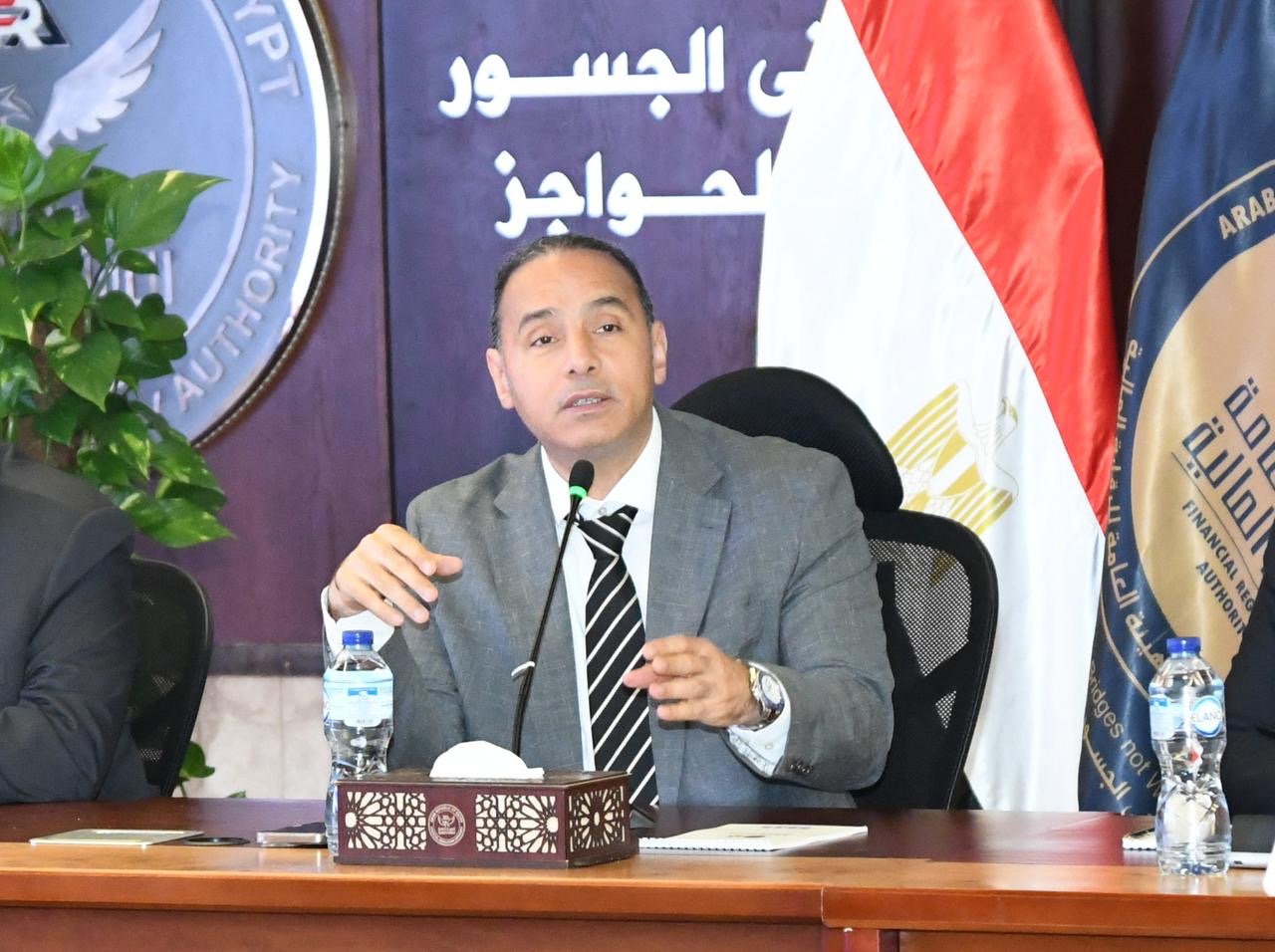
A high-level, expanded meeting was held at FRA headquarters, bringing together leaders from the Egyptian Exchange (EGX), Misr for Central Clearing, Depository and Registry (MCDR), brokerage firm representatives and investors.
The meeting focused on putting the final touches on “Short Selling” framework.
Dr. Islam Azzam – FRA Chairman:
- “Activating short selling is a highly anticipated milestone following years of technical discussions.”
- “The regulatory framework will soon be updated to align with newly agreed-upon changes.”
- “It is one of the world’s most widely used mechanisms in successful regional markets.”
- “This tool will deepen the market, boosting its appeal to foreign and younger investors.”
- “While unlocking new avenues, robust awareness campaigns for lenders and borrowers remain vital.”
- “We are building an integrated regulatory framework that balances new opportunities with trader protection.”
- “We are committed to a launch that mirrors top-tier global standards in transparency and risk management.”
Financial Regulatory Authority (FRA) chaired by Dr. Islam Azzam, hosted an extensive panel discussion at its headquarters to review the final preparations for activating the short selling mechanism on the Egyptian Exchange.
The high-profile session witnessed the participation of Mr. Omar Radwan, EGX Chairman, Dr. Khaled Serry Siam, Chairman of MCDR; Mr. Mohamed Sabry, EGX Vice Chairman; and Mr. Mahmoud Gibrel, Assistant to Chairman. Senior executives and technical teams from both FRA and EGX, alongside key capital market participants and representatives from securities brokerage firms, joined them.

The meeting was convened as part of FRA’s ongoing approach to foster open dialogue with market stakeholders, actively listening to diverse perspectives and proposals to refine regulatory tools and mechanisms. This collaborative effort aims to elevate market efficiency, boost competitiveness, and attract both local and foreign investments.
Dr. Islam Azzam emphasized that finalizing the regulatory and operational infrastructure for the short selling mechanism remains a matter of utmost priority for FRA. He noted that the technical debates and previous attempts to implement this mechanism have spanned years, keeping market participants in eager anticipation of an instrument that is already a fundamental driver in global financial centers and successful regional markets.
He expressed his commitment to activate the mechanism in a manner that aligns with global best practices in transparency and governance, while fostering continuous integration among all involved parties. This approach aims to expand and deepen the market, making it easier for investors across different segments to leverage the benefits of short selling—a goal that requires intensifying awareness and promoting investment education among both lenders and prospective borrowers.
Dr. Islam Azzam emphasized that launching short selling will be a crucial step toward boosting the competitiveness of the Egyptian capital market and expanding the array of investment tools and strategies available to investors. This will enhance market efficiency and its capacity to attract capital, with an expected surge in interest from foreign and younger investors.

FRA Chairman noted that short selling serves as an important tool for more efficient portfolio management, creating greater opportunities to generate returns, capitalize on price movements, and reinvest profits into new ventures. Additionally, it will boost liquidity levels and improve price efficiency.
Dr. Islam Azzam explained that the Authority, in collaboration with EGX and MCDR, has developed an integrated, agile regulatory and supervisory framework. This framework guarantees the structural integrity of short-selling operations, ensures efficient risk management and safeguards the rights of all market participants.
The panel discussion focused on evaluating and developing the regulatory and operational aspects of activating the short selling mechanism. This aims to support the readiness of both EGX and MCDR, ensuring seamless electronic linkage between brokerage firms and MCDR in this regard.
Furthermore, the session reviewed the operational details of the central lending system designed and managed by MCDR. This system tracks all workflow stages, specifically verifying shares available for lending, displaying the names, quantities, lending periods, and accepted rates on the system, alongside tracking borrowing transaction data, lender and borrower identities and loan termination records.
The discussions also addressed several technical and regulatory pillars in light of FRA’s Resolution No. 365 of 2026 governing short selling operations. These included requirements for brokerage firms to participate in the activity, solvency and financial capability criteria, technical and operational efficiency standards, safeguards for protecting client funds, and concentration limits. This resolution will soon be amended to align with the new system updates mutually agreed upon by the FRA, EGX, MCDR, and market participants.

Additionally, the debates touched upon the regulatory obligations imposed on brokerage firms. Most notably, these include receiving orders from borrowing clients, maintaining acceptable collateral of no less than 50% of the borrowed securities’ market value, and deploying automated systems to monitor total collateral. The framework also mandates a daily mark-to-market revaluation of borrowed shares at the close of each business day based on the latest closing price, alongside margin call procedures throughout the lending period to ensure effective risk management.
Officials from FRA, EGX, and MCDR listened to the insights and proposals put forward by brokerage firm representatives and investors. They discussed potential challenges facing the practical implementation of the system and addressed an extensive range of technical and regulatory inquiries.
At the conclusion of the session, Dr. Islam Azzam reaffirmed that ongoing coordination and consultation between the Authority and relevant entities will continue to ensure the imminent launch of the short-selling mechanism. He emphasized that the upcoming framework will be highly advanced, transparent, and fully regulated, striking a careful balance between encouraging investment and maintaining the highest levels of market stability and discipline.
Commonly referred to as the sale of borrowed securities, short selling is a financial mechanism that allows investors to trade shares when they anticipate a decline in a stock’s price. Under this system, an investor borrows shares from an existing owner to sell them immediately at the current market price, with the intention of buying them back later at a lower price to return them to the original owner. The process relies fundamentally on a lender, who is the original owner willing to loan out a portion of their holdings, and a borrower, who utilizes the borrowed shares to profit from downward price differentials based on market expectations.
To initiate the transaction, a borrower who expects a specific stock to fall will secure the shares from a lender, sell them in the open market, and deposit a cash collateral. If the borrower’s prediction proves correct and the stock price drops, they buy the shares back at the lower price to secure a profit, return the borrowed shares to the lender, and cover the borrowing costs from their gains.
Conversely, if the stock price rises and the borrower decides to cut their losses, they must buy the shares back at the higher market price—incurring a financial loss—and return the shares to the lender along with the required borrowing fees. In either scenario, the lender receives a financial yield for lending their shares while fully retaining all other benefits and corporate actions associated with stock ownership.
Tags: Mr. Omar Radwan - Executive Chairman of the Egyptian Exchange, Mr. Mohamed Sabry - Vice Chairman of the EGX, Short Selling, Dr. Khaled Serry Siam - Chairman of MCDR, Mr. Mahmoud Gebril – Assistant to Chairman Last modified: June 28, 2026