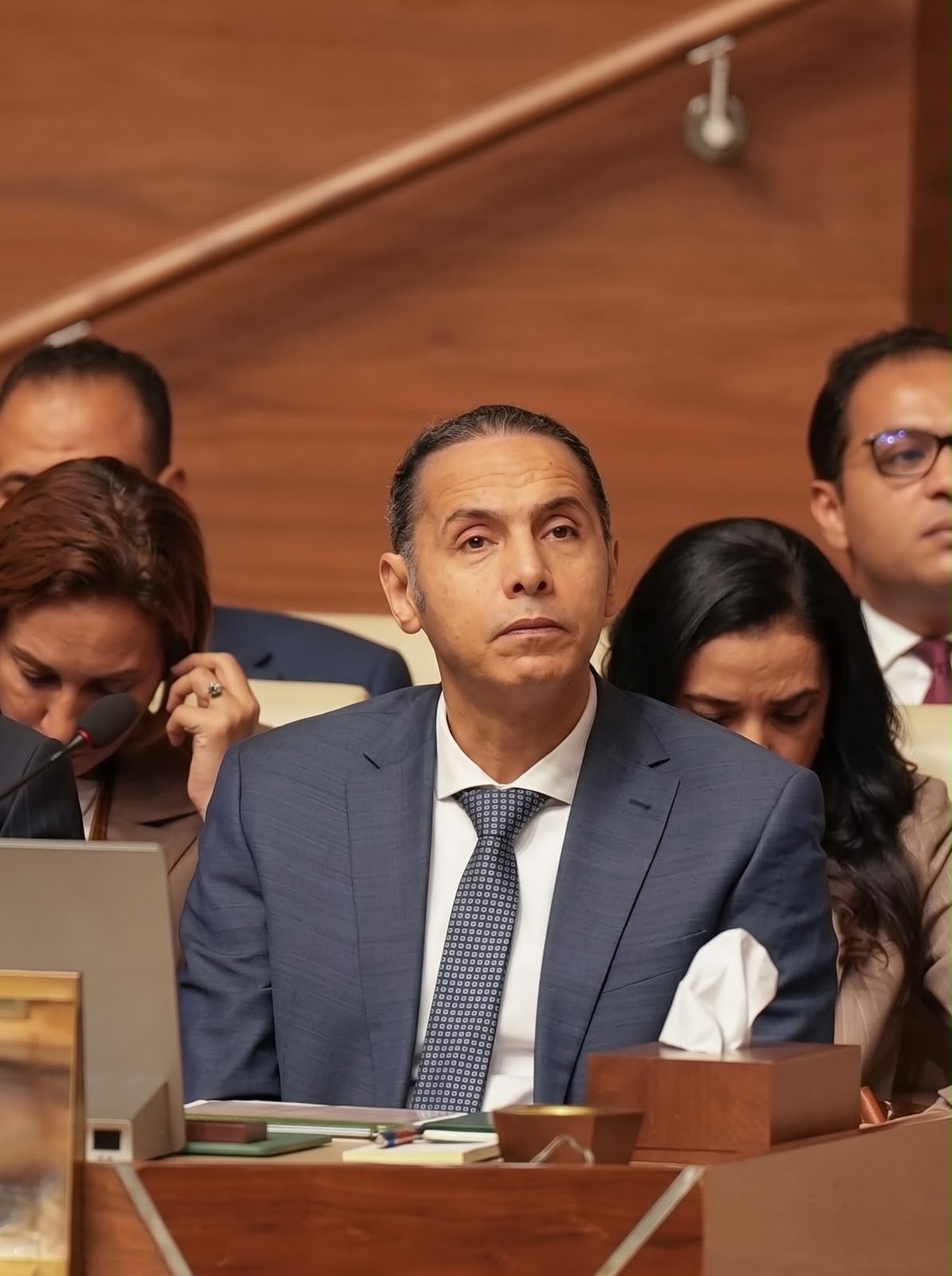
Dr. Islam Azzam – FRA Chairman:
- “Non-banking financial framework guarantees equal opportunities, driving substantial growth in women’s representation.”
- “Joint efforts are vital to establish anti-discrimination policies across all workplaces.”
- “The Authority is balancing market growth with enhanced consumer safeguards and financial awareness initiatives.”
- “Major investment opportunities are unfolding in Egypt’s capital market via derivatives and the upcoming short-selling rollout.”
Dr. Islam Azzam, FRA Chairman highlighted the tangible results of the Authority’s strategic drive for gender inclusion within the non-banking financial sector. By 2025, female representation on company boards climbed to 26.9% with 1,236 members, while Egyptian women’s participation across FRA-regulated financial activities witnessed unprecedented growth.

The address was delivered at the inauguration of the 8th session of Council of Arab Businesswomen at the Arab League headquarters. The high-profile event was attended by Secretary-General of the Arab League Ahmed Aboul Gheit, former Secretary-General Amr Moussa, Presidential Economic Advisor Dr. Hala El-Said, National Council for Women President Counselor Amal Ammar, GAFI Chairman Dr. Mohamed Awad, and President of Council Sheikha Hessa Saad Al-Abdullah Al-Sabah, joined by senior officials and businesswomen from Egypt and Arab nations.
Dr. Islam Azzam explained that FRA translates equality and equal opportunity policies into practical enforcement through robust regulatory frameworks. Key initiatives include a 50% reduction in development and service fees for companies directing over 25% of their services to women, as well as reduced application and examination fees for issuing sustainable development securities and bonds—chiefly women’s empowerment bonds—incentivizing corporations to fund projects that advance women’s economic standing.
He highlighted FRA’s mandatory governance rules designed to secure fair female representation on corporate boards. He emphasized that integrating women into executive decision-making broadens organizational perspectives, drives operational performance and profitability and fosters professional growth.
FRA Chairman stressed the necessity of joint action to establish workplace anti-discrimination policies across all sectors, embed gender equality within supervisory regulations and advance women’s entrepreneurship. He also highlighted the importance of strengthening women’s academic, financial and technical skills to secure executive and leadership roles, while promoting the innovation of new financial instruments for economic empowerment and social protection.
In this context, he noted that by the end of the second quarter of this year, women’s representation reached approximately 52.8% of microfinance beneficiaries, totaling 1.8 million female beneficiaries out of 3.4 million nationwide, with outstanding financing balances granted to them reaching 39.7 billion pounds (Note: adjusting figure representation as 33.7 billion EGP), representing approximately 45.4% of total financing balances.
FRA Chairman noted that expanding women’s access to finance is being met with strengthened consumer protection safeguards to mitigate default, fraud and liquidation risks. He highlighted recent regulatory directives requiring OTP-based customer identity verification, instant data linking between lenders and credit registries and credit inquiries grounded in behavioral analytics.
He also highlighted the Authority’s continuous financial awareness efforts across two integrated tracks: first, educating women on safe, accessible opportunities for investment, financing, and economic empowerment; and second, raising awareness regarding customer rights, obligations, fraud prevention and legal grievance mechanisms to provide maximum safeguards for female clients.
Dr. Islam Azzam invited Arab Businesswomen and entrepreneurs to explore the latest developments in Egypt’s non-banking financial sector which present major investment opportunities, particularly within the Egyptian Exchange (EGX).
He shed light on the upcoming rollout—within a few weeks—of the short-selling mechanism, detailing its targeted objectives alongside margin trading to improve price discovery, stimulate trading, attract new investor segments and regulate hedge fund activity in Egypt for the first time. He also highlighted the launch of derivatives market last March, the introduction of futures contracts, and the pivotal role of the “market maker” mechanism moving forward to enhance market liquidity—especially following the recent tax package exempting this mechanism from stamp duty.
FRA Chairman concluded his address by emphasizing that true financial inclusion extends beyond mere access to services, products and investment avenues. Instead, it relies on evaluating their quality, suitability and tangible impact on the beneficiary, backed by comprehensive awareness of service features and the mutual rights and obligations of all parties.
Tags: Council of Arab Businesswomen and Arab Businesswomen Last modified: October 1, 2026