- Protocol aims to enhance awareness initiatives while curbing fraud and illicit market practices
- Agreement set to stimulate female entrepreneurship and expand adoption of FinTech applications
- Joint training programs launched to build women’s financial and digital capabilities, accelerating economic integration
Dr. Islam Azzam, FRA Chairman:
- 1.8 million women benefited from microfinance in Q2 2026—representing over 52% of total beneficiaries and 45% of total loan balances
- FRA has enacted landmark decisions to empower women; female corporate board representation exceeded requirements to reach 26% across 1,236 board positions
- Financial literacy is the foundation of sound economic decision-making and advancing gender equality is a vital pathway to develop the non-banking financial sector and maximize its developmental impact
Counselor Amal Ammar, President of the National Council for Women (NCW):
- The protocol reflects inter-institutional alignment across state entities to enhance the economic participation of Egyptian women
- Women are not merely passive recipients of financial services—they are active producers, enterprise owners, investors and primary economic decision-makers
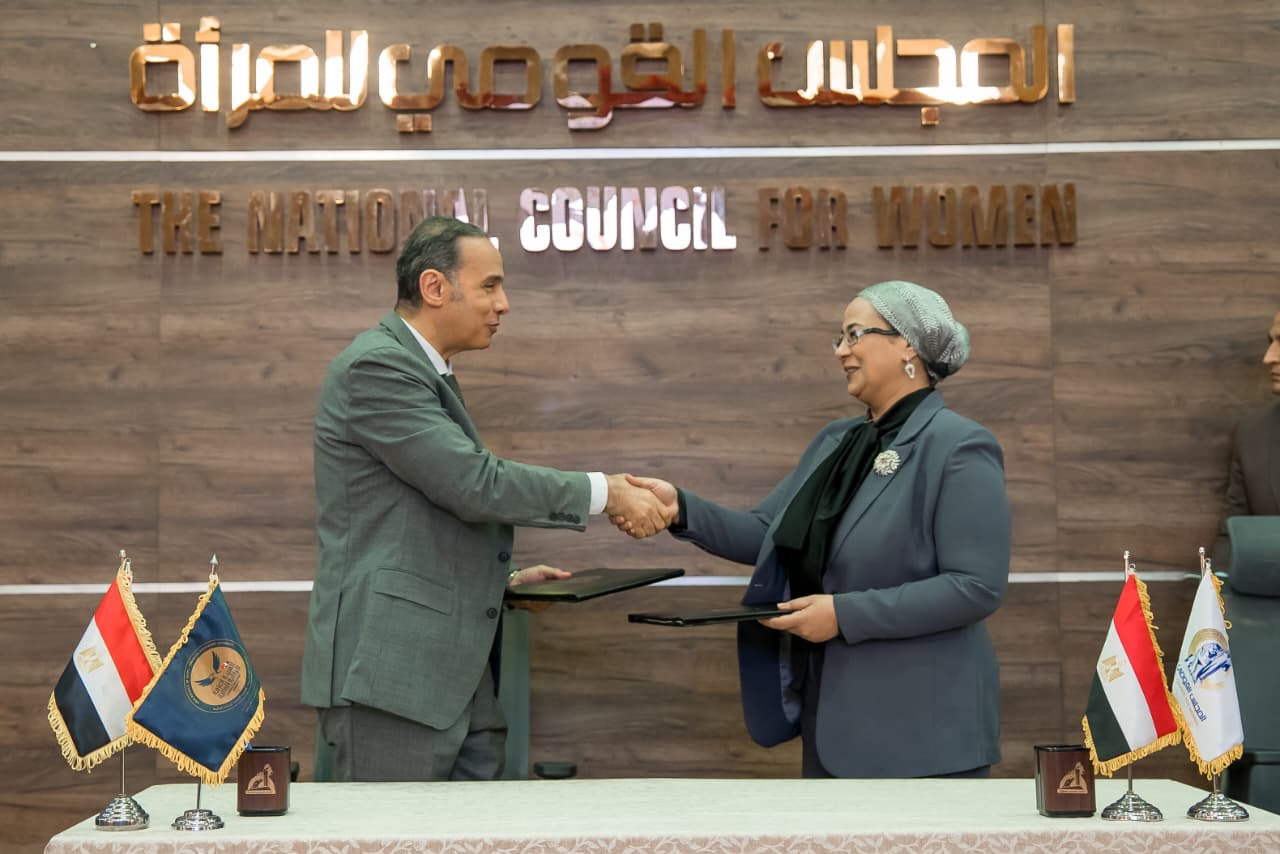
Dr. Islam Azzam, FRA Chairman and Counselor Amal Ammar, President of the National Council for Women (NCW), have signed a cooperation protocol aimed at elevating women’s financial literacy and delivering more efficient, accessible non-banking financial services to Egyptian women—with a focus on underprivileged and vulnerable groups. The agreement aims to stimulate female entrepreneurship, support women-owned micro, small, and medium-sized enterprises (MSMEs) and accelerate the adoption of FinTech and digital transformation solutions. This milestone aligns with Egypt’s broader strategy to support the socio-economic empowerment of women and expand financial inclusion.
Under the terms of the protocol, the two parties will exchange data and analytical studies on female financial inclusion indicators, launch public awareness initiatives on available non-banking financial services and deliver targeted financial education programs for women and girls. These efforts aim to empower women to make sound financial decisions while preventing and mitigating financial fraud.
To strengthen both institutional and individual capacities in financial and digital spheres, FRA and NCW will organize joint events, workshops and training modules designed to accelerate women’s economic integration, widen their participation in investment channels and maximize their access to non-banking financial services.
A joint steering committee comprising representatives from both entities will be formed to oversee the implementation of the protocol, resolve potential operational challenges, convene periodically to review completed deliverables and formulate recommendations for future collaboration.
Dr. Tarek Seif, FRA Vice Chairman; Dr. Mohamed Abdel Aziz and Dr. Rehab Taha, Assistants to Chairman; and Counselor Reda Abdel Moaty, Senior Advisor to Chairman attended the signing ceremony.
In his opening remarks, Dr. Islam Azzam expressed his pleasure at visiting the headquarters of the National Council for Women (NCW) to sign the agreement. He commended the NCW’s pivotal role since its inception in advancing the status of Egyptian women, refining legislative frameworks and delivering nationwide awareness, training, legal, psychological and family support services.
He noted that the protocol represents the official extension of a deep-seated partnership between both entities —executed in collaboration with UN Women—which recently celebrated the graduation of 39 financial literacy facilitators in rural areas, with plans to expand the pool of trainers in upcoming phases.
Dr. Islam Azzam underscored the high priority FRA accords to women’s empowerment through landmark regulatory mandates. Key among these is requiring listed companies and non-banking financial institutions to maintain at least 25% female board representation, with a minimum of two seats per board. This directive resulted in 1,236 women holding corporate board seats by the end of 2025, pushing female representation to over 26%—surpassing the mandated threshold and up from 18% in 2021.
He also highlighted the framework allowing the issuance of sustainability-linked bonds dedicated to women’s empowerment, accompanied by discounted inspection and study fees, alongside regulatory incentives granted to non-banking financial institutions expanding microfinance to female entrepreneurs. Dr. Islam Azzam revealed that women accounted for 52.8% of total microfinance beneficiaries in Q2 2026, totaling 1.8 million female beneficiaries with combined funding of EGP 33.7 billion, representing 45.4% of total market financing balances.
Furthermore, he detailed the overall growth in microfinance outstanding balances, which surged by 14% year-over-year to reach EGP 74.4 billion at the close of Q2 2026, compared to EGP 64 billion in Q2 2025. This momentum underscores the critical role of non-banking finance in translating women empowerment from a slogan into tangible economic realities—enhancing women’s capacity to produce, earn and elevate living standards for their families.
FRA Chairman elaborated on recent regulatory decisions enacted by FRA to tighten Know Your Customer (KYC) identity verification, curb loan defaults, streamline credit approval controls and combat fraudulent practices. He stressed the importance of ensuring female micro-entrepreneurs are fully aware of these updates which demonstrate FRA’s unwavering commitment to consumer protection.
In conclusion, Dr. Islam Azzam referenced his recent decision to establish a dedicated Gender Equality Working Group within FRA. Designed to entrench gender parity as a core driver for developing the non-banking financial sector and maximizing its developmental yield, the decision transitions gender equity management into an institutionalized, data-driven system built on measurable indicators and tracking tools.
Counselor Amal Ammar, President of the NCW, emphasized that the protocol reflects the alignment of state institutions to advance Egyptian women’s economic participation and unlock the opportunities offered by non-banking financial services. She emphasized that the Financial Regulatory Authority plays a pivotal role in regulating and developing non-banking financial activities, while the National Council for Women serves as the national mechanism dedicated to women empowerment, leveraging a wide reach across all governorates and direct engagement with women’s localized needs.
She added that women’s active participation in economic life extends beyond individual impact to benefit families, communities, and the national economy. In a rapidly evolving economic landscape, economic empowerment is no longer confined to job opportunities or enterprise ownership; it is now intrinsically tied to financial inclusion, financial literacy, credit access and leveraging FinTech and digital financial solutions.
Counselor Amal Ammar emphasized that women are not merely passive recipients of financial services, but rather active producers, enterprise owners, investors, and primary economic decision-makers. Consequently, designing tailored financial services presents a genuine opportunity to broaden the base of national economic activity, bringing non-banking financial tools closer to women and directly aligning them with their economic needs and aspirations.
Following the signing ceremony, Dr. Mohamed Abdel Aziz, Assistant to Chairman delivered a comprehensive presentation outlining non-banking financial activities and investment channels—spanning capital markets, insurance, and non-bank financing—highlighting their critical contribution to the national economy. He demonstrated how non-banking FinTech solutions can be used to generate returns on secure, fully regulated investments. He emphasized FRA’s central regulatory and supervisory role in safeguarding market participants, ensuring the continued expansion of these financial instruments and broadening their reach to drive financial inclusion across all segments of society.
Meanwhile, Dr. Marian Kaldas, Member of Parliament and Board Member of the National Council for Women, underscored the importance of genuine economic empowerment for women. She emphasized that the objective extends beyond traditional savings to securing safe investment channels for women’s capital while safeguarding them against fraud and illicit market practices.
She praised the practical steps taken by FRA to strengthen women’s leadership and market participation, highlighting decisions by FRA Chairman Dr. Islam Azzam to appoint women to the Authority’s top executive and leadership positions.
On the other hand, Dr. Marianne Azer, Board Member of the National Council for Women and Chair of its Scientific Research, Technology and Cybersecurity Committee, delivered a visual presentation focused on raising cybersecurity awareness under the theme “Technology Unlocks Opportunities; Awareness Ensures Safety.”
Through interactive case studies, Dr. Azer highlighted digital fraud prevention strategies in the era of artificial intelligence, stressing the core principle of “Verify First.” She also highlighted key legislative frameworks, including the Anti-Cybercrime Law, and outlined an operational roadmap to translate the protocol into practical, field-based and virtual training initiatives—including Train-the-Trainer (ToT) programs across governorates—to foster secure and informed FinTech adoption.
Additionally, Dr. Mohamed Hegazy, Legislative Consultant and Member of the NCW’s Scientific Research, Technology, and Cybersecurity Committee, outlined the existing legal frameworks designed to protect market participants from fraud.
Following his address, Eng. Adel Abdel Moneim, Member of the NCW’s Scientific Research, Technology, and Cybersecurity Committee, delivered an awareness briefing on evolving fraudulent schemes, emphasizing the heightened risks faced by female consumers when lacking full awareness of mitigation strategies.
Tags: National Council for Women Last modified: September 23, 2026