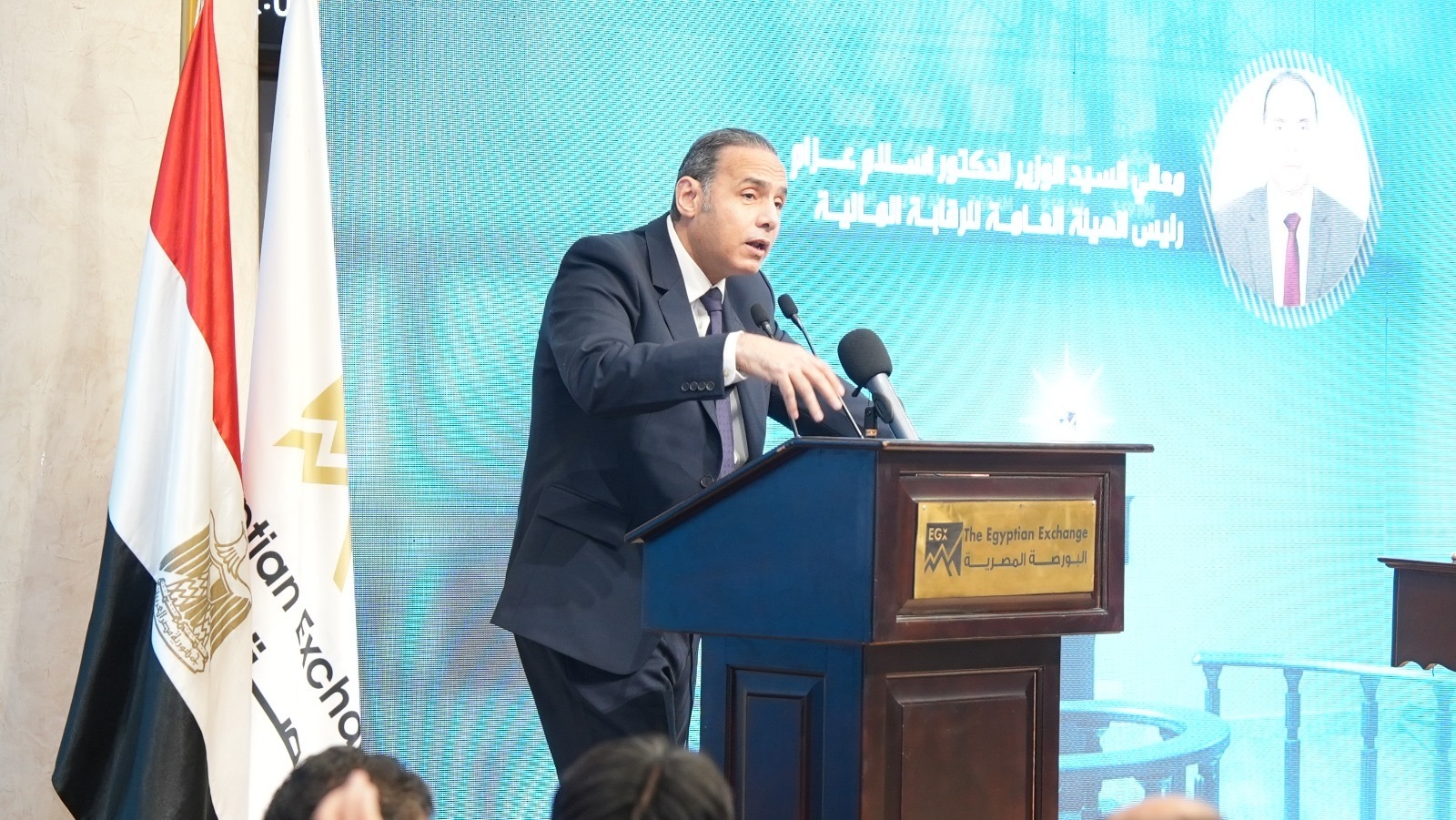
Dr. Islam Azzam:
- FinTech growth requires extensive awareness to ensure sound decision-making.
- We are committed to adopt international best practices in financial technology.
Dr. Mohamed Abdelaziz:
- Through the ‘I Invest’ initiative, students at all levels benefit from pathways linking theory to practice.
- Financial literacy remains critical for driving financial inclusion and strengthening the national economy.
The historic headquarters of the Egyptian Stock Exchange (EGX) hosted the signing of a landmark Memorandum of Understanding (MoU). This strategic agreement between the Ministry of Education, Hiroshima University, and the Japanese firm “SPRIX”- supported by the technical expertise of the Financial Regulatory Authority (FRA) – aims to formally integrate financial literacy into the national curriculum for second-grade secondary students (Grade 11).
This initiative marks a qualitative leap in modernizing school curricula, developing the educational system, and enhancing students’ core skills. It also serves as the culmination of a decade of efforts by the Financial Regulatory Authority (FRA) to spread financial awareness through a diverse range of tracks and initiatives.
Dr. Islam Azzam, FRA Chairman expressed his appreciation for the launch of this initiative. He noted that incorporating financial literacy into the secondary school curriculum – in collaboration with the Ministry of Education and Japanese partners- is a distinguished and pivotal step toward spreading financial awareness in schools. This serves as a fundamental cornerstone for empowering youth in the fields of investment and entrepreneurship. Dr. Azzam further emphasized that the Authority will provide all necessary technical support to ensure the success of this experience, while continuing to launch additional initiatives in this regard.
FRA Chairman highlighted the vital role of Financial Technology (FinTech) in integrating youth into the capital market and other investment activities. This integration is supported by the sector’s legislative and regulatory framework, which has been established through the Authority’s resolutions in recent years.
Dr. Islam Azzam highlighted the remarkable surge in youth participation within the capital market, noting that investors aged 18 to 40 recently accounted for approximately 79% of stock market participants. Furthermore, youth participation in new investment vehicles, such as gold funds, reached nearly 80%. He emphasized that these figures underscore the urgent need to intensify awareness regarding non-banking financial sectors, helping young investors make sound decisions and mitigate risks.
He pointed out the vital role of financial literacy in bridging the gap between the rapid adoption of financial technology and sound investment decision-making. This, he noted, is an additional reason for the importance of integrating financial literacy into school curricula and focusing on linking theoretical aspects to practical reality. Such an approach enhances the efficiency of students and youth, particularly through simulated trading in the capital market, keeping pace with global developments and modern applications in the financial and technological fields.
Dr. Islam Azzam further emphasized that integrating youth into various financial sectors contributes significantly to expanding and deepening the market, while enhancing the overall attractiveness of Egypt’s investment environment.
On the other hand, Dr. Mohamed Abdelaziz, Assistant to Chairman and Supervisor of the Awareness Initiative, stated that through its cooperation with the Ministry of Education, the Authority focuses on building a financially conscious generation from an early age. This includes integrating financial literacy concepts into the educational process, developing financial resource management skills, distinguishing between “needs” and “wants,” and assisting in sound financial decision-making. These efforts empower students to be more independent in managing their money and capable of planning for their financial future.
He explained that the Authority signed two cooperation protocols with the Ministry in this field to integrate students into the non-banking financial sector through the “I Invest” initiative for Egyptian schools. The program scales financial awareness skills according to age group and educational level. This is followed by a transition into two tracks: moving from the theoretical knowledge stage to actual simulation on trading platforms. This simulation utilizes financial balances provided to students by supporting and granting entities, though students are temporarily restricted from withdrawing or disposing of these funds.
Dr. Abdelaziz noted that university students also benefit from the “I Invest” platform. He cited studies showing that 30% to 40% of wealth inequality between individuals is attributed to differences in financial literacy. Furthermore, he highlighted that such literacy is a decisive factor in the success of financial inclusion policies and the development of the national economy.
He concluded by highlighting the importance of regional outreach, particularly in Alexandria, to provide an engaging educational experience. He noted that the 2022 protocol with the Ministry of Higher Education has already benefited 12,000 students through 115 lectures, resulting in the graduation of 66 certified financial awareness trainers.
Tags: Integrating Financial Literacy in Curricula, Ministry of Education, Hiroshima University, SPRIX Japanese Company, Dr. Mohamed Abdelaziz Last modified: April 30, 2026