
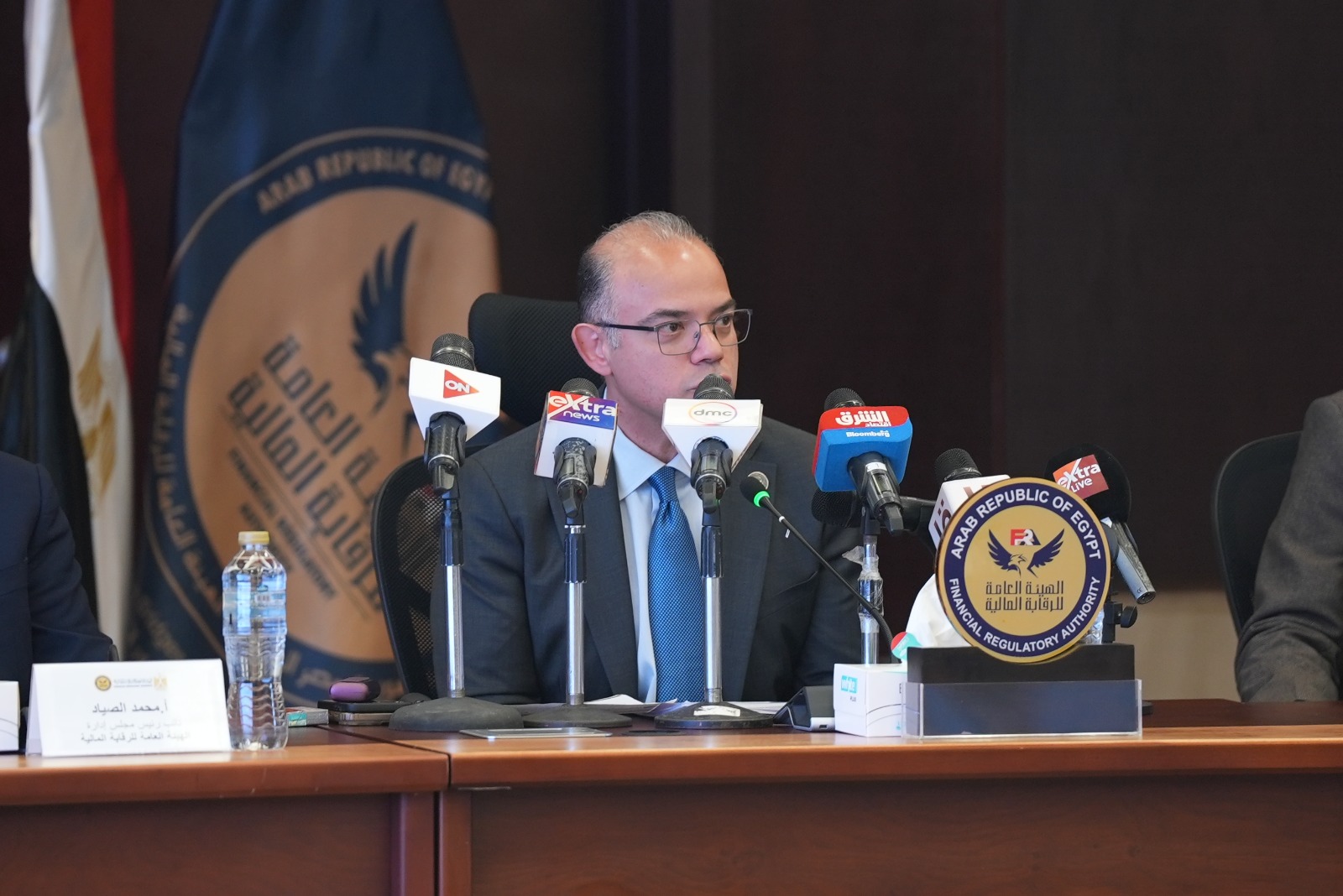
Dr. Mohamed Farid: FRA Chairman:
- Launching the derivatives market is a core pillar of the financial market development strategy.
- The license follows completion of the regulatory and legislative framework and coordination with the Stock Exchange and MCDR.
- A four-stage plan to ensure market organization and stability.
- Seven companies apply for futures brokerage licenses.
- The Authority’s dedicated efforts to formulate a strategic roadmap for the launch of Egypt’s derivatives market.
Dr. Islam Azzam, EGX Chairman:
- Foreign investment funds signal readiness to enter the Egyptian market following the launch of derivatives market.
- System integration and connectivity milestones to be finalized within a month.
Financial Regulatory Authority (FRA), chaired by Dr. Mohamed Farid, has officially granted the Egyptian Exchange (EGX) the first license to operate a specialized futures exchange. This historic milestone underscores the Authority’s commitment to develop the capital market’s legislative and technical infrastructure, expanding the suite of available investment instruments, and fortifying risk management frameworks in accordance with global benchmarks.
Financial derivatives are financial instruments or contracts that derive their value from an underlying asset, such as stocks, price indices, or other assets defined by the Authority. These can take the form of futures contracts, options, swaps, or other standardized contracts.
Dr. Mohamed Farid, FRA Chairman emphasized that launching the derivatives market is a primary pillar of the Authority’s strategy aimed at building more advanced and sustainable financial markets. He added that FRA exerted significant effort over many months to reach a suitable formula for activating derivatives in Egypt, as they are essential global tools for risk management, market stability, and attracting a broader segment of investors.
FRA Chairman noted that the license was issued after completing the necessary regulatory and legislative frameworks and fully coordinating with the Egyptian Exchange (EGX) and the Misr for Central Clearing, Depository and Registry (MCDR). This ensures the application of the highest standards of governance, discipline, investor protection, and market stability.
Dr. Farid outlined a strategic four-stage roadmap, beginning with the launch of EGX30 index futures this March. Subsequent phases will introduce EGX70 index futures, followed by single-stock futures to provide granular hedging. The final stage will debut options contracts on stocks and indices, ensuring a stable, phased transition toward a well-regulated market and sustainable growth.
Futures contracts are standardized, binding agreements to buy or sell securities, price indices, or other financial instruments according to specifications prepared by the Exchange and approved by the Authority. Execution occurs at a future date based on an execution price agreed upon at the time the contract is initiated.
Dr. Farid stressed the implementation of an integrated risk management system in the derivatives market to mitigate systemic risks. He revealed that seven brokerage firms have already applied for licenses to practice futures brokerage, reflecting high demand and local investor interest in developing their investment tools.
Futures contracts represent a qualitative shift in deepening the market, increasing liquidity levels, and providing advanced financial tools that enable investors to hedge against price fluctuations. This improves pricing efficiency and market depth.
Key advantages include risk hedging, profit generation through price movements, the use of financial leverage, and better investment portfolio management.
Dr. Islam Azzam, EGX Chairman expressed his deep appreciation to Dr. Mohamed Farid for his tireless efforts to finalize derivatives launch. He noted that FRA and EGX held regular weekly meetings to coordinate details, including developing a proprietary internal trading program to expedite the process. He indicated that the technical link between firms and MCDR would be finalized within a month.
Dr. Azzam highlighted a surge in interest from foreign investment funds, prompting high-level meetings to discuss market entry and trading strategies. This interest underscores global investor trust in Egypt’s evolving market infrastructure and its commitment to provide advanced hedging and investment tools that align with international standards.
He added that the close collaboration between FRA and the EGX will facilitate the implementation of advanced risk management systems, ensuring market stability and protection of investor rights. This synergy positions Egypt on a path toward sustainable financial market growth, while significantly enhancing market depth and liquidity.
On the other hand, specific risk management procedures applied by MCDR include membership requirements, initial margin, variation margin, settlement members’ contributions to the default fund (CCP guarantee account), and allocations from the Investor Protection Fund.
The resources of the Central Counterparty (CCP) Guarantee Account are utilized according to a specific hierarchy: starting with the contribution of the defaulting settlement member, followed by the contribution of the Clearing and Settlement Company, and the primary contributions of the remaining settlement members. This is further supported by allocations from the Investor Protection Fund, supplementary contributions from settlement members, and finally, the reserves of the Clearing and Settlement Company.
To better understand real estate futures contracts, imagine you anticipate a significant surge in property prices over the coming year. Instead of purchasing an apartment immediately, you enter into a Futures Contract to “lock in” the purchase of a unit one year from today at a fixed price of EGP 2 million. To secure this position and guarantee performance, you pay an Initial Margin
of EGP 200,000, with the remaining balance due only upon the contract’s maturity date. Consequently, if the price rises, you will have profited before the agreement is even executed. However, if the price drops, you will be obligated to purchase the apartment and thus incur a loss.
Tags: EGX Chairman, Financial Regulatory Authority (FRA), Egyptian Exchange (EGX), Dr. Mohamed Farid, Mohamed Farid, Financial Derivatives, Risk Management, Futures Contracts Last modified: January 21, 2026