
- The Authority has successfully democratized investment, making opportunities available to all segments of society.
- When I joined the Authority in 2022, I found that insurance premiums had not changed since 1999, so we developed a new work strategy.
- Success requires diligence, continuous learning and indispensable financial stability to empower Generations Z and Alpha.
- Internal Audit, Governance, Supervision, and Risk Management are now vital functions across nearly 3,900 supervised institutions.
- FRA is directly linked to all aspects of citizens’ financial lives.
Dr. Mohamed Farid, FRA Chairman confirmed that the strategic evolution of legislative and regulatory frameworks, coupled with the growing adoption of FinTech, has been crucial in broadening the base of individuals benefiting from non-banking financial activities. He noted that these developments specifically empower youth and women for active participation across the capital market, insurance and investment sectors.
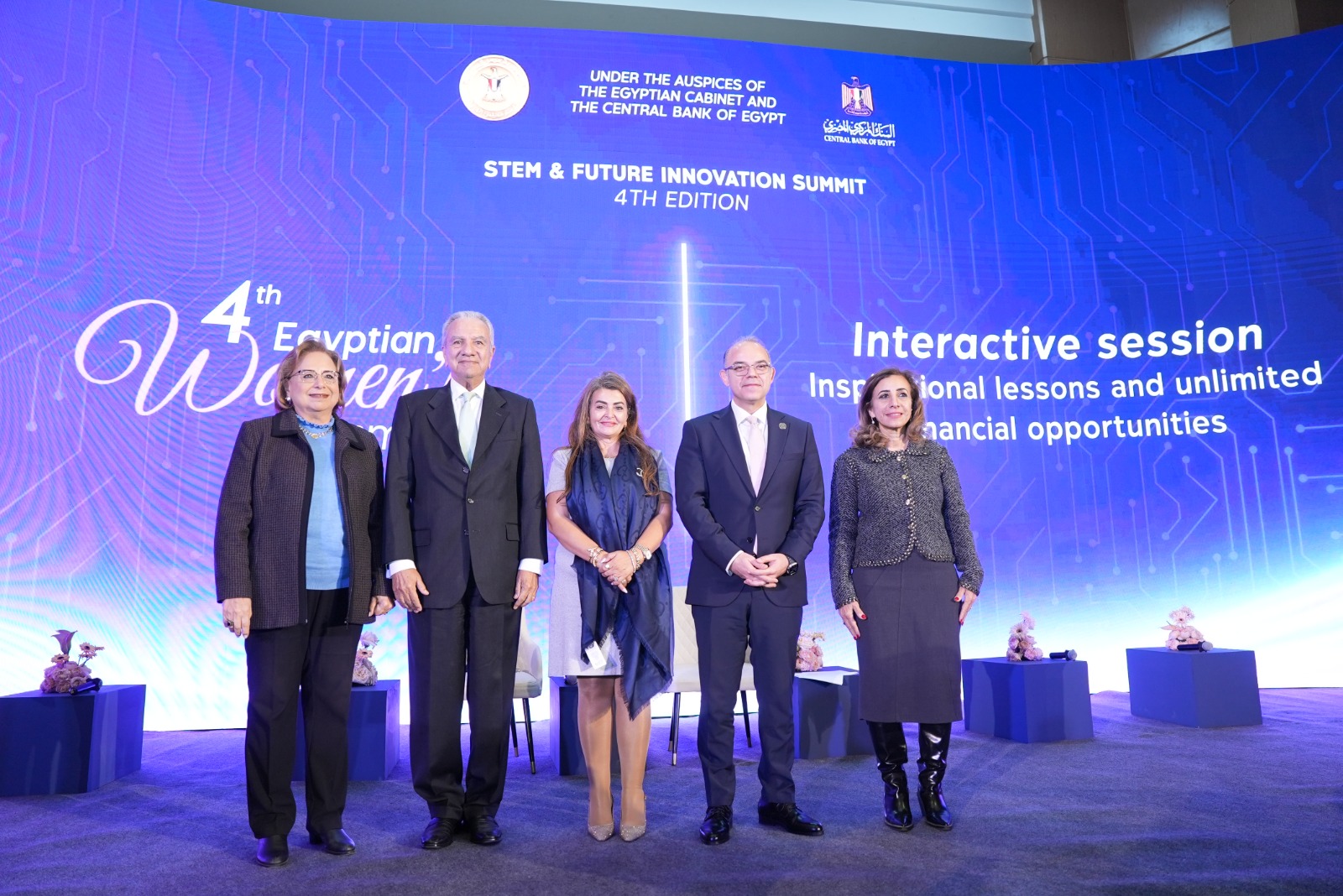
Dr. Farid delivered his statement during the keynote address at the Top 50 Women STEM and Future Innovation Summit. Held under the auspices of the Prime Minister and in collaboration with the National Council for Women (NCW), the summit convened women leaders and experts across science, technology and innovation, alongside university students.
FRA Chairman explained that the complexity of public service, driven by interconnected interests and multiple stakeholders, demands continuous diligence and strong academic references. He stressed that continuous education and engaging with international practices, especially from developed nations, are crucial for effective market understanding and communicating seamlessly with global investors and institutions.
Dr. Farid added that dedication and lifelong learning are mandatory for public service, noting his acquisition of four Master’s degrees to master global financial trends. He confirmed that such extensive knowledge is key to speaking the same language as international institutions, asserting that academic and professional credentials define the standards for regulatory bodies.
He highlighted the common misconception that the public fully grasps the scope of public sector work, noting that reality proves otherwise. Given the sheer scale and complexity of issues facing public authorities, he stressed the imperative for effective citizen communication to inform them of reforms and their impact on daily life. Achieving this level of engagement, he concluded, requires officials to possess strong academic backgrounds and accumulated experience.
FRA Chairman noted that his professional and personal path was profoundly influenced by various human and professional role models who shaped his perspective on the value of work and public responsibility. His primary role model was his father, Ambassador Farid Saleh, who taught him that the value of work transcends mere position or title, being rooted instead in commitment and continuous contribution, as demonstrated by the Ambassador’s post-diplomatic service in parliament.
He also reviewed the pivotal role of his mother in shaping his character, describing her as a model of discipline and sacrifice. He highlighted her decision to resign from her academic post at the Faculty of Pharmacy to support his father’s diplomatic missions abroad and dedicate herself entirely to the family. He asserted that this example instilled in him the firm belief that institutional success cannot be achieved without commitment and accountability.
FRA Chairman also pointed to the influence of several academic and professional figures on his career, notably Dr. Mahmoud Mohieldin who served as a model for combining academic excellence with comprehensive economic vision and the ability to apply it practically within international institutions. This strengthened Dr. Farid’s belief in the need to integrate scientific research and financial analysis with the mandates of sustainable development and rigorous institutional practice.
Dr. Mohamed Farid concluded by explaining that FRA is one of the entities most connected to citizens’ daily lives, given its supervision of sectors that directly touch their needs. These include mandatory and complementary motor insurance, private pension and insurance funds, insurance brokerage firms, actuarial expertise firms and investment funds.
In this context, FRA Chairman highlighted the success of gold investment funds, which launched from a “zero base” in 2023. Within a remarkably short period, these funds attracted between EGP 4 billion and EGP 5 billion from approximately 250,000 investors, many of whom began with modest contributions. This underscores the Authority’s success in achieving “Investment Democratization,” effectively making investment opportunities accessible to all segments of society.
FRA Chairman pointed to Einstein’s wisdom that repeating the same actions while expecting different outcomes is a fundamental flaw, Dr. Farid reflected on the insurance sector’s long-standing stagnation. He noted that in 1999, market penetration was 0.9% of GDP, highlighted a profound gap in the reach of essential insurance services.
He noted that while insurance premium rates average 5-7% in emerging markets and 12–15% in developed economies, Egypt’s sector faced a critical shortage of actuaries. As a highly specialized field, the lack of qualified actuarial talent was a major obstacle to growth during that period.
He emphasized that human capital crisis extended to the educational curricula for insurance brokers. Dr. Farid pointed out that insurance premiums remained stagnant for decades – literally showing no movement- until he assumed the chairmanship of FRA in 2022. He remarked that the sector had historically failed to evolve, remaining at a standstill.
Dr. Farid emphasized that it was no longer acceptable to rely on a traditional regulatory approach limited to issuing circulars and mandates. Instead, the Authority adopted a transformative strategy that prioritizes updating methods and knowledge sharing as the fundamental entry point for genuine structural reform.
He explained that any regulator must pursue two non-negotiable objectives: maintaining financial stability as a primary mandate and driving market development and expansion. He concluded that FRA’s recent reforms were specifically designed to create a tangible impact across the financing, capital market and insurance sectors.
FRA Chairman emphasized that understanding the mindset of Generations Z and Alpha was the primary driver behind these reforms. Recognizing that these generations have little patience for traditional procedures such as visiting brokerage firms to sign physical contracts, the Authority issued Law No. 5 of 2022. This landmark legislation regulates the use of technology in non-banking financial activities, creating a transformative impact across all market sectors.
Dr. Farid highlighted a massive surge in stock market participation following digitalization. Historically, the average number of new investors was roughly 25,000 to 29,000 annually. Following the implementation of e-KYC (Electronic Know Your Customer) procedures and other reforms, this number skyrocketed to 340,000 new investors in 2023, followed by 240,000 in 2024, and reaching 281,000 by October 2025. He emphasized that this qualitative shift resulted from the digitalization of ‘Know Your Customer’ (KYC) procedures, alongside a package of other sectoral reforms.
Regarding the insurance sector, Dr. Farid pointed to a stark capitalization disparity. In 2007, the minimum capital requirement for banks stood at EGP 500 million, compared to just EGP 60 million for insurance firms. By 2020, while the banking requirement soared to EGP 5 billion, insurance capital requirements remained stagnant at EGP 60 million.
To address this, the Unified Insurance Law was enacted, consolidating four separate laws into a single, robust legislative framework. A key outcome of this law was raising the minimum capital for insurance companies from EGP 60 million to EGP 750 million. This move ensures the recapitalization of these firms, significantly enhancing their risk-carrying capacity and their ability to innovate new products.
These reforms are already yielding tangible results. Currently, three to four insurance companies have begun issuing fully digital insurance policies for new motor insurance funds. This allows citizens to complete the entire process conveniently from their homes.
This regulatory overhaul has catalyzed a high demand for specialized roles in Internal Audit, Governance and Compliance. As a regulator, FRA now mandates these functions within 3,900 institutions under its supervision.
To support this, the Financial Services Institute (FSI) is actively training and qualifying human capital to meet these new market requirements. Additionally, FRA has brought Third-Party Administrators (TPAs) in the healthcare sector under direct supervision to ensure market integrity and consumer protection.
Dr. Farid concluded by reaffirming that empowering women and youth, particularly in Science, Technology, Engineering and Mathematics and innovation, is the fundamental pillar for building a more efficient, resilient and sustainable financial future.
Tags: FRA Chairman, Financial Regulatory Authority, Financial Regulatory Authority (FRA), Top 50 Women, Youth and Women Empowerment Last modified: December 18, 2025