
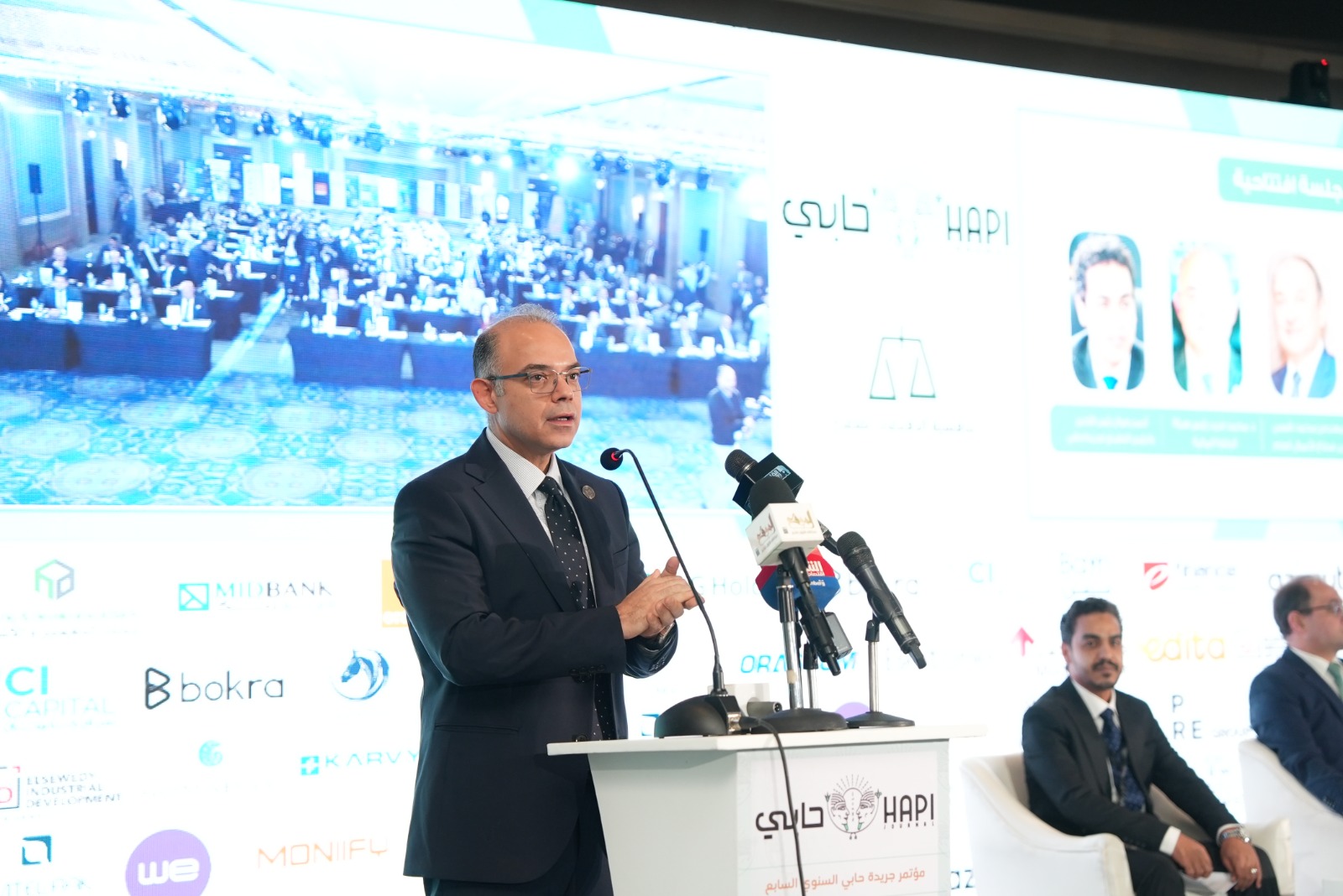
Dr. Mohamed Farid – FRA Chairman:
- Policies within the non-banking financial sector (NBFS) prioritize stability, product diversification and investor attraction while safeguarding participant rights.
- Market capitalization has reached EGP 3 trillion, with daily trading volumes hitting EGP 8 billion.
- Short selling and Market Making mechanisms will be introduced very soon to enhance liquidity and diversify investment products.
- EGX will be formally licensed to trade derivatives by the end of January.
- New frameworks for title insurance and private pension funds will drive long-term savings and enhance systemic financial stability.
- Citizens should not face life’s risks alone – insurance services are essential to providing necessary protection.
- Regulating non-banking finance activities marks a turning point in enhancing stability and meeting societal needs, supported by periodic oversight to ensure transactions’ integrity.
Dr. Mohamed Farid confirmed that the Egyptian capital market has undergone rapid and unprecedented developments in recent years. This progress is evident in the surging number of new investors and the substantial growth in the size and value of investment funds. These milestones are a direct result of a comprehensive package of regulatory and legislative reforms implemented by the Financial Regulatory Authority (FRA). These reforms focused on developing financing mechanisms, enhancing market efficiency and expanding non-banking financial services (NBFS) to bolster financial inclusion and link markets to the real economy.
In his keynote address at Hapi’s 7th Annual Conference, Dr. Farid added that these developments were not accidental but the product of integrated strategic plans. These were executed under a clear vision to build a new regulatory framework for all NBFS activities and products, while remaining tailored to the unique characteristics and needs of the Egyptian market.
He further explained: “Driven by our belief in institutional integration, we have ensured that NBFS regulations are grounded in practical reality. We do not operate in isolation; rather, we maintain continuous coordination with the Egyptian government, its ministries and relevant authorities.”
Dr. Farid emphasized that FRA has adopted growth-oriented policies designed to strike a balance between maintaining financial stability and driving market expansion and development, all while safeguarding the rights of market participants.
He continued that these policies included developing the legislative framework, updating regulatory rules, introducing new financial products and streamlining procedures. Such efforts enhance market attractiveness and depth while maintaining the highest levels of regulatory discipline and investor protection.
He highlighted entrepreneurship, investment funds, real estate crowdfunding and venture capital as priority areas in recent years. These are viewed as vital instruments for supporting economic growth, fostering innovation, providing diverse, sustainable funding sources for startups and emerging projects.
Dr. Farid noted that FRA views financial services as an inherent right for citizens and consumers. Structured savings and access to insurance are fundamental to the financial stability of individuals and families. He stressed that insurance is more than just a financial product; it is a critical tool for risk management and protecting citizens’ livelihoods.
He reiterated that the core role of any financial regulator is to achieve financial and market stability, as these are the pillars of trust in the financial system. Once stability is secured, the focus shifts to market development and maximizing its role, depth and overall efficiency.
He pointed out that FRA’s executive plan for market evolution was built on several key pillars. These include reshaping the public perception of NBFS activities and continuously refining regulatory decisions based on global best practices. Additionally, the plan involved the implementation of 14 governing laws, 11 of which were issued directly, while FRA plays a pivotal role in the application of the remaining three.
Within the framework of developing the legislative environment, we have updated rules and regulations to “localize” global standards, ensuring they align with the specific nature of the domestic market. This is clearly exemplified by the introduction of Special Purpose Acquisition Companies (SPACs) which led to the launch of Egypt’s first SPAC, a move that underscores the Egyptian market’s capacity to adopt modern financial instruments.
The Authority also introduced the regulated carbon markets. This pioneering initiative reflects Egypt’s commitment to sustainable finance by linking financial markets to climate change issues. Furthermore, the early move to mandate that financial institutions measure their carbon footprints has placed the Egyptian market ahead of many international peers.
These efforts have yielded positive performance indicators across the non-banking financial sector (NBFS). Market capitalization has reached approximately EGP 3 trillion, with daily trading volumes nearing EGP 8 billion. Additionally, there has been a significant expansion in the beneficiary base for consumer finance, microfinance and insurance activities.
To further enhance trading mechanisms, FRA is currently working on introducing new financial products, including Short Selling and Market Making activities, following precise technical and regulatory adjustments to maximize their impact on liquidity and trading. Furthermore, FRA intends to grant the Egyptian Exchange a derivatives trading license by the end of January, as part of ongoing coordination to attract new investor segments and diversify investment tools.
Regarding digital transformation, FRA has issued the first license for a micro-insurance company and are simultaneously building a robust technological infrastructure for all NBFS sectors. Electronic “Know Your Customer” (e-KYC) standards have been implemented, with approximately 400,000 digital verifications successfully completed, enhancing operational efficiency and user experience.
Dr. Farid also revealed the launch of “Title Insurance” as an innovative regulatory and insurance tool. This product aims to secure stable property titles and protect buyers from the risks of historical ownership disputes, thereby boosting confidence in the real estate market and supporting development and investment.
FRA Chairman noted that regulating activities like consumer finance and microfinance has had a direct impact on citizens’ lives. Durable goods and vehicles constitute about 80% of consumer finance portfolios. Furthermore, FRA survey on microfinance revealed that 75% of participants benefited significantly, among them was a woman working in livestock farming who noted that financing enabled her to secure fodder and improve her economic activity.
To support long-term savings, he confirmed that FRA is working on regulating and launching “Private Pension Holding Funds” as qualified savings vehicles. These funds will provide diverse investment tools, help increase national savings rates and bolster individual financial stability while supplying the capital market with long-term capital, he highlighted a marked increase in insurance premium volumes.
Dr. Farid concluded by stressing that citizens must recognize that they cannot face life’s risks alone without utilizing available insurance services. He called on insurance companies to expand their reach to the widest possible audience, especially now that regulations permit selling insurance policies through e-platforms.
Tags: FRA Chairman, Dr. Mohamed Farid, Chairman of the Financial Regulatory Authority, Egyptian Exchange, EGX, Hapi Conference, Egyptian Economy, Capital Market Last modified: December 18, 2025