Chairman of the Financial Regulatory Authority (FRA) and IOSCO’s Growth and Emerging Markets Committee:
- Diversifying corporate financing and revitalizing bond markets will help absorb long-term savings and unlock new investment opportunities.
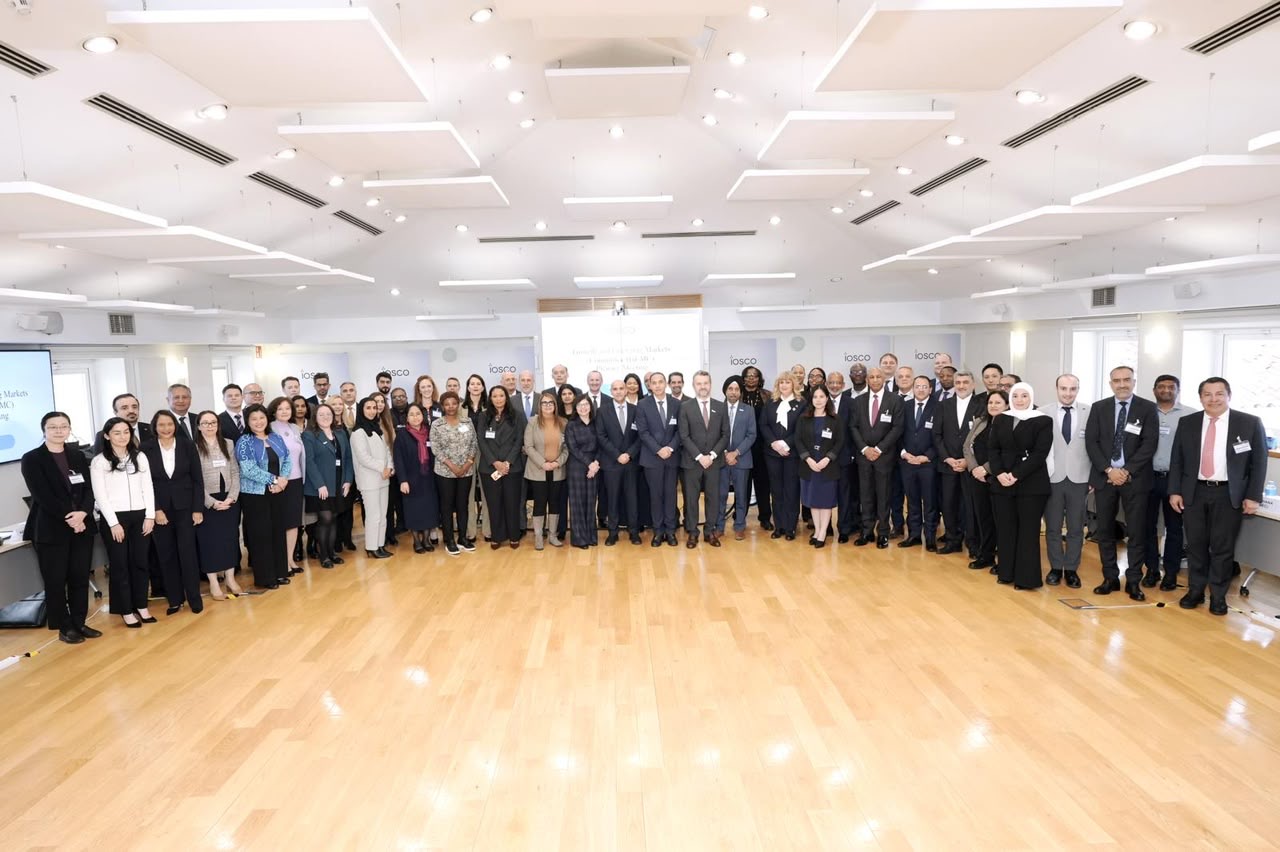
IOSCO’s Growth and Emerging Markets Committee (GEMC), chaired by Dr. Islam Azzam, FRA Chairman held an international workshop in collaboration with the International Capital Market Association (ICMA) titled “Building Resilient and Efficient Corporate Bond Markets in Growth and Emerging Markets.” The event took place during the Committee’s periodic meeting in the Spanish capital, Madrid.
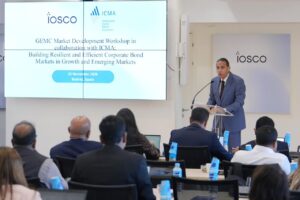
This follows Dr. Islam Azzam’s election as Chair of the GEMC for the 2026–2028 term, alongside his role as Vice Chair of the IOSCO Board for the same period.
FRA’s high-level participation reinforces Egypt’s role within IOSCO, which plays a vital part in advancing financial markets through close technical cooperation with the International Monetary Fund (IMF), the World Bank and other major institutions. These efforts aim to implement international principles and standards across member jurisdictions, facilitate the exchange of information and expertise among regulators, provide training and technical assistance programs, and build institutional capacity for member states.
Corporate bond market activity centers on companies issuing and selling bonds to investors to finance their operations, projects and expansions—rather than relying solely on bank loans or raising capital through equity issuance. Consequently, corporate bonds diversify financing sources and contribute to deepening capital markets.
The workshop was held as part of the Committee’s efforts to support capital market development in growth and emerging economies by examining the regulatory and operational challenges facing corporate bond markets and reviewing international experiences and potential solutions to enhance their efficiency and liquidity, thereby strengthening their capacity to finance the private sector.

Dr. Islam Azzam stated that developing corporate bond markets is a priority for many growth and emerging economies due to their role in diversifying financing sources available to companies, reducing over-reliance on bank lending, absorbing long-term savings and creating new investment opportunities for investors.
He explained that building effective corporate bond markets does not stop at providing appropriate legislative and regulatory frameworks; it also requires a diverse investor base, infrastructure capable of supporting issuance and trading operations, and sufficient levels of transparency and liquidity in the secondary market to enhance pricing efficiency and facilitate bond trading.
Dr. Islam Azzam added that developing these markets requires addressing several challenges, including limited liquidity, low participation from certain investor segments and risks related to credit, interest rates and inflation. He emphasized the importance of tackling these challenges through policies and regulatory frameworks tailored to the nature of each market and its stage of development.
He also highlighted the “ACCELERATE” initiative approved by the GEMC—scheduled for implementation in 2027—which aims to help member jurisdictions translate capital market development priorities into specific, actionable reforms by bringing together regulators, international organizations, and industry experts to share knowledge, identify solutions and formulate practical reform plans. He noted that corporate bond markets stand to benefit significantly from the initiative, given the varying levels of market development, regulatory frameworks, and institutional structures across jurisdictions—factors that call for exchanging experiences and adapting international solutions to each country’s specific needs rather than relying on a one-size-fits-all model.
Dr. Islam Azzam affirmed that collaborating with ICMA allows participants to leverage the association’s specialized expertise in fixed-income markets and connect regulatory perspectives with the practical applications of market institutions, helping attendees explore realistic solutions to the challenges facing corporate bond markets in growth and emerging economies.
The workshop examined the role of corporate bond markets and their core components within global capital markets, as well as their importance in financing the real economy. It also reviewed existing regulatory frameworks, ongoing market developments, the prerequisites for establishing and growing these markets, and the factors influencing liquidity and investor participation.
Discussions further covered the obstacles hindering market growth and potential regulatory and policy remedies, alongside the risks associated with bond issuance and trading—primarily credit, interest rate, inflation, and liquidity risks—supported by case studies and practical experiences from various markets.
Additionally, the workshop addressed the impact of innovation and sustainable finance on the future of corporate bond markets, including the development of sustainable bond markets, strengthening market integrity and investor confidence, and the role of digitalization, tokenization, and artificial intelligence (AI) in improving efficiency, transparency and access to finance.
Tags: Financial Regulatory Authority (FRA), Dr. Islam Azzam - FRA Chairman, IOSCO Growth and Emerging Markets Committee Last modified: November 29, 2026