Dr. Islam Azzam – FRA Chairman:
- Training Serves as Key Pillar for Protocol Goals: Enhancing Report Quality and Indicator Accuracy Across Non-Banking Financial Activities
Financial Regulatory Authority (FRA), through its training arm, the Financial Services Institute (FSI), has launched a comprehensive training program for employees of the Central Agency for Public Mobilization and Statistics (CAPMAS). The five-day initiative focuses on financial data analysis, non-banking financial activity indicators, and advanced statistical extraction to support national economic decision-making. The program forms part of the operational roadmap under a strategic cooperation protocol signed between FRA and CAPMAS to unify statistical metrics and optimize their use in drafting reports and shaping economic policies.
FRA Chairman Dr. Islam Azzam stated that training is vital to realizing the protocol’s goals, particularly streamlining the exchange and availability of statistical metrics. This initiative aims to elevate data accuracy in official reporting, improve statistical workflows, curb duplicate information requests to businesses, reduce administrative overhead and deliver robust analytics for monitoring economic performance and future growth trends.
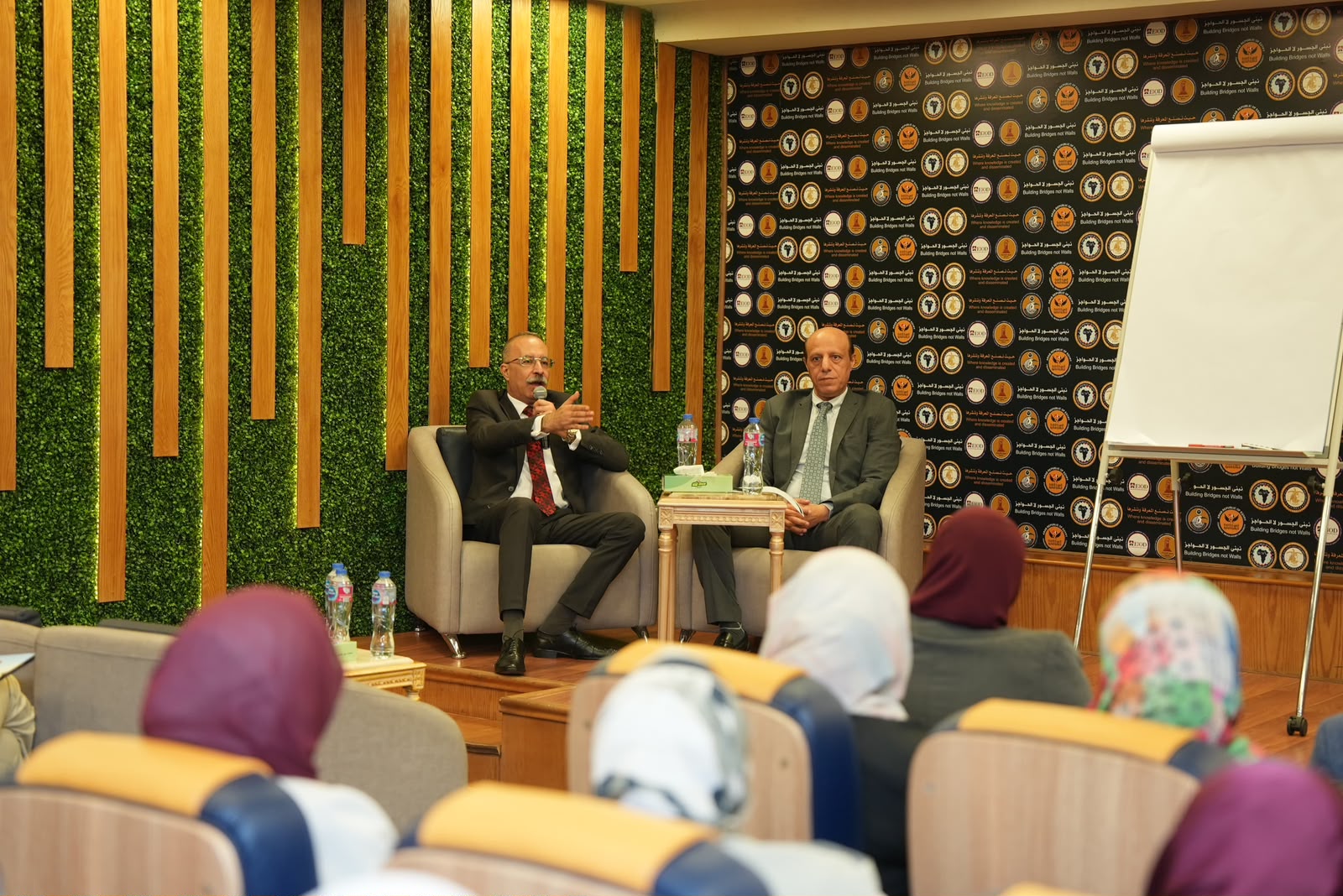
The program was inaugurated by Mr. Mohamed El-Sayyad and Dr. Tarek Seif FRA Vice Chairman as part of ongoing institutional cooperation between FRA and CAPMAS. The initiative aims to foster technical knowledge sharing and build institutional capacity for analyzing financial data and extracting statistical indicators that reflect developments across FRA-regulated sectors.
During the opening ceremony, Mr. Mohamed El-Sayyad welcomed CAPMAS trainees, emphasizing the crucial role of accurate data and statistics in analyzing non-banking financial activities—particularly capital markets and exchanges. He noted that robust metrics are essential for tracking market performance, measuring activity indicators and supporting objective decision-making. Mr. El-Sayyad also highlighted the establishment and evolving mandate of FRA, outlining its regulatory scope which balances market stability with the protection of participant rights.
For his part, Dr. Tarek Seif reviewed the key legislation and regulatory frameworks governing the Authority’s operations, along with international accounting standards and their importance in enhancing financial disclosure, transparency and data comparability. Dr. Seif also highlighted the pivotal role of Egypt’s insurance sector, stressing that reliable statistical data and metrics are vital for evaluating sector performance, monitoring activity growth and driving efficient supervision, strategic planning and policy formulation.
Spanning five days, the program covered the regulatory mandate of the Financial Regulatory Authority (FRA), the entities under its supervision and the role of non-banking financial activities in supporting the national economy. It introduced key non-banking financing activities, including financial leasing, factoring, consumer finance, mortgage finance, and SME and microfinance.
A full module focused on capital markets, covering brokerage firms, custodians, asset managers, the Egyptian Exchange (EGX), and clearing and settlement operations. The session provided hands-on training in key financial metrics—including liquidity, profitability, solvency, and operational efficiency—backed by practical case studies analyzing published brokerage data.

Another full day focused on the insurance sector, examining company structures, reinsurance, brokerage activities, and insurance products. Training centered on analyzing data related to premiums, claims, technical reserves, provisions, investments and underwriting surplus, complemented by practical application extracting relevant metrics from insurance company disclosures.
The curriculum also covered financial statement analysis for insurance and brokerage firms, familiarizing trainees with the components of balance sheets, income statements, cash flow statements, and supplementary notes. Participants analyzed revenue streams, commissions, financial assets, liabilities and client balances using real-world published financial statements.
The program concluded with a specialized module on financial and statistical analysis, covering horizontal and vertical analysis techniques, financial ratios (liquidity, profitability, activity, and capital structure), growth rates, sector averages, and performance benchmarks. It also addressed data quality verification, consistency checks, comparability, error correction and generation of statistical tables, sectoral indicators, periodic reports and databases.
The implementation of this program reflects the commitment of both FRA and CAPMAS to activate their cooperation protocol, foster database integration, and enhance staff technical capabilities. Ultimately, the initiative aims to generate reliable, up-to-date statistical indicators and elevate non-banking financial analysis while upholding the highest standards of accuracy, confidentiality and data protection in service of economic planning and decision-making.
Tags: Financial Regulatory Authority (FRA), Financial Services Institute (FSI), Cooperation Protocol Last modified: October 27, 2026