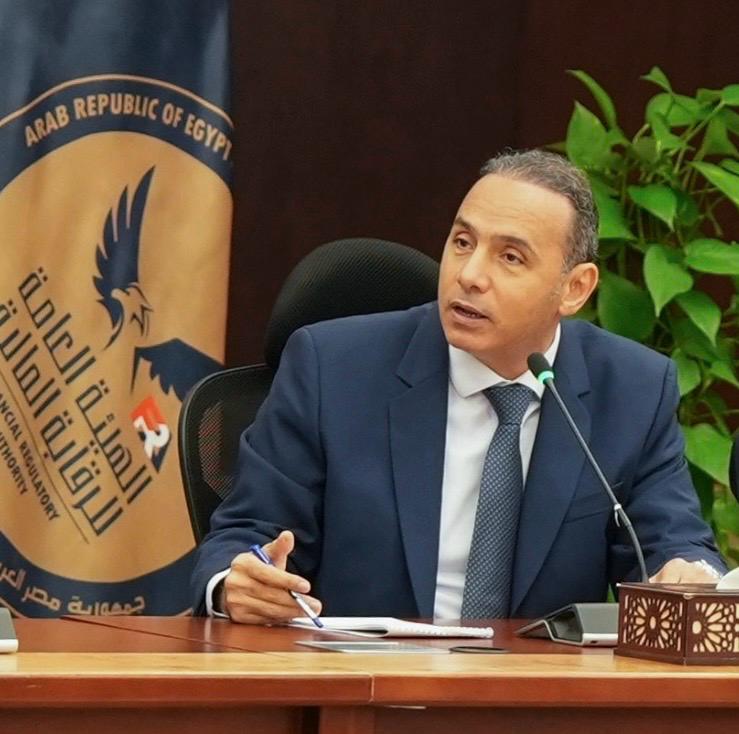
Dr. Islam Azzam, FRA Chairman:
- Standardizing contracts to boost market transparency and streamline client-broker relations.
- Setting clear rules for party obligations, collateral management and position closing.
- Engaging market stakeholders during live central lending system trials.
In a pivotal step toward the official launch of short selling in Egyptian capital markets, Dr. Islam Azzam, FRA Chairman has issued a decision approving model short selling contract for brokerage firms and securities borrowers. Enacted under the new regulatory framework established by FRA Board Decree No. 155 of 2026, the decision establishes a clear contractual framework governing the relationship between the securities borrower—seeking to borrow securities available on the central lending platform at Misr for Central Clearing, Depository and Registry (MCDR)—and the licensed brokerage firm executing transactions on the borrower’s behalf.).
Short selling mechanism operates on the presence of a lending client who wishes to lend owned shares and securities borrower who seeks to borrow shares to execute a short sale with the intent to repurchase and return them to the lender at a later date if the stock price is expected to decline. Profit is thereby realized from the price differential between the sale and purchase prices, based on the investor’s market expectations and price projections, pursuant to a binding agreement executed with a licensed brokerage firm.
This model contract was finalized following extensive consultations with market stakeholders to leverage industry expertise and address practical operational requirements. This collaborative approach reflects FRA’s commitment to constructive community dialogue, ensuring the development of enforceable rules that balance operational efficiency, risk management, and investor protection.
The template comprehensively defines the procedural roles, rights and obligations of both brokerage firms and securities borrowers. It regulates key operational aspects including fees, commissions, and the distribution of yields generated from invested cash collateral. These provisions enhance operational efficiency, promote market transparency, and ensure investors fully understand the mechanism, its associated risks, margin maintenance protocols, and position closure triggers under regulatory or contractual rules.
To mitigate operational and market risks, the contract establishes several mandatory safeguards. Borrowers must post initial margin collateral—at or above the minimum thresholds mandated by FRA regulations—as specified in the contract annex prior to execution, while brokerage firms are legally required to deposit cash collateral into dedicated, segregated accounts restricted to short-selling transactions.
Furthermore, to minimize counterparty risk and safeguard market integrity, brokerages must continuously mark borrowed securities to market using real-time intraday closing prices and monitor the collateral-to-borrowed-securities ratio against regulatory and contractual minimums.
The contract sets clear protocols for defaults or delays in returning borrowed shares, requiring the brokerage to execute mandatory buy-ins subject to standard settlement cycles. It also outlines mandatory position closure events, such as a security’s removal from the eligible trading list or regulatory triggers arising from corporate actions like M&As, tender offers, spin-offs, or liquidations.
In addition, brokerage firms are obligated to provide clients with a comprehensive guide detailing short selling concepts, operational mechanics, risks and benefits, updating this guide after any regulatory revisions and distributing it to clients at least annually.
Regarding financial terms and yield management, cash collateral must be invested exclusively in FRA-approved instruments throughout the lending period. Brokers must inform clients of investment channels and actual yields, crediting returns directly to the client’s account upon receipt or according to agreed terms.
Regarding borrowing costs, the model contract mandates that brokerage firms clarify all expenses, commissions and other cash charges debited from the client, clearly stating the calculation basis for each. Future modifications to fees and commissions are strictly prohibited without the client’s explicit written consent.
Furthermore, the model guarantees the client’s right to issue buy and sell orders for borrowed securities, as well as to fully or partially close their open positions during the borrowing term in accordance with contractual provisions.
Dr. Islam Azzam highlighted that the model contract is a key milestone toward fully enabling short selling across Egyptian capital markets. The Authority is currently finalizing technical guidelines and practical manuals for all market participants in tandem with fine-tuning the MCDR Central Securities Lending (CSL) system through live trials. This ensures real-time operational integration between MCDR and brokerage firms, complete end-to-end transaction logging, and full market visibility. Under this setup, borrowers can view all available lending offers to select options aligned with their investment goals, while lenders can monitor market-wide lending bids.
FRA Chairman added that the standard contract unifies market practices, establishes clear operational boundaries for collateral administration, enforces position monitoring, and outlines strict remedies for margin calls or delayed share returns to protect all market participants.
To ensure regulatory and legal compliance, borrowers must explicitly certify ultimate beneficial ownership of the account, declare legitimate sources of funds, and submit required Customer Due Diligence (CDD) data pursuant to Anti-Money Laundering (AML) Law No. 80 of 2002 and related non-banking financial regulatory decrees.
Furthermore, licensed brokerages are bound by strict confidentiality mandates prohibiting the disclosure of client data or transaction records to third parties without prior written consent, except when responding to regulatory reporting mandates from FRA or lawful judicial orders.
It is worth noting that in a short-selling transaction, the securities borrower profits if their expectations of a drop in the borrowed security’s price are realized. In this scenario, the borrower repurchases the shares at a lower market price to lock in a profit margin and returns them to the lender, with borrowing costs deducted from the realized profit. Conversely, if the security’s price rises and the borrower wishes to limit their losses, they must repurchase the shares at the higher market price, incurring a loss in addition to paying borrowing costs.
In both cases, the securities lender earns a yield for lending their securities—typically approximating the risk-free rate plus an additional lending premium—while continuing to retain all underlying economic benefits associated with stock ownership.
Tags: Financial Regulatory Authority (FRA), Dr. Islam Azzam - FRA Chairman, Short Selling, Model Contract Template for Brokerage Firms and Securities Borrowers Last modified: October 22, 2026