- Bilateral Talks Explore Strategies to Scale Microfinance activities and Boost Socioeconomic Development
- Delegation Shares Practical Insights on Risk Mitigation, Compliance Standards, and Client Protection Mechanisms
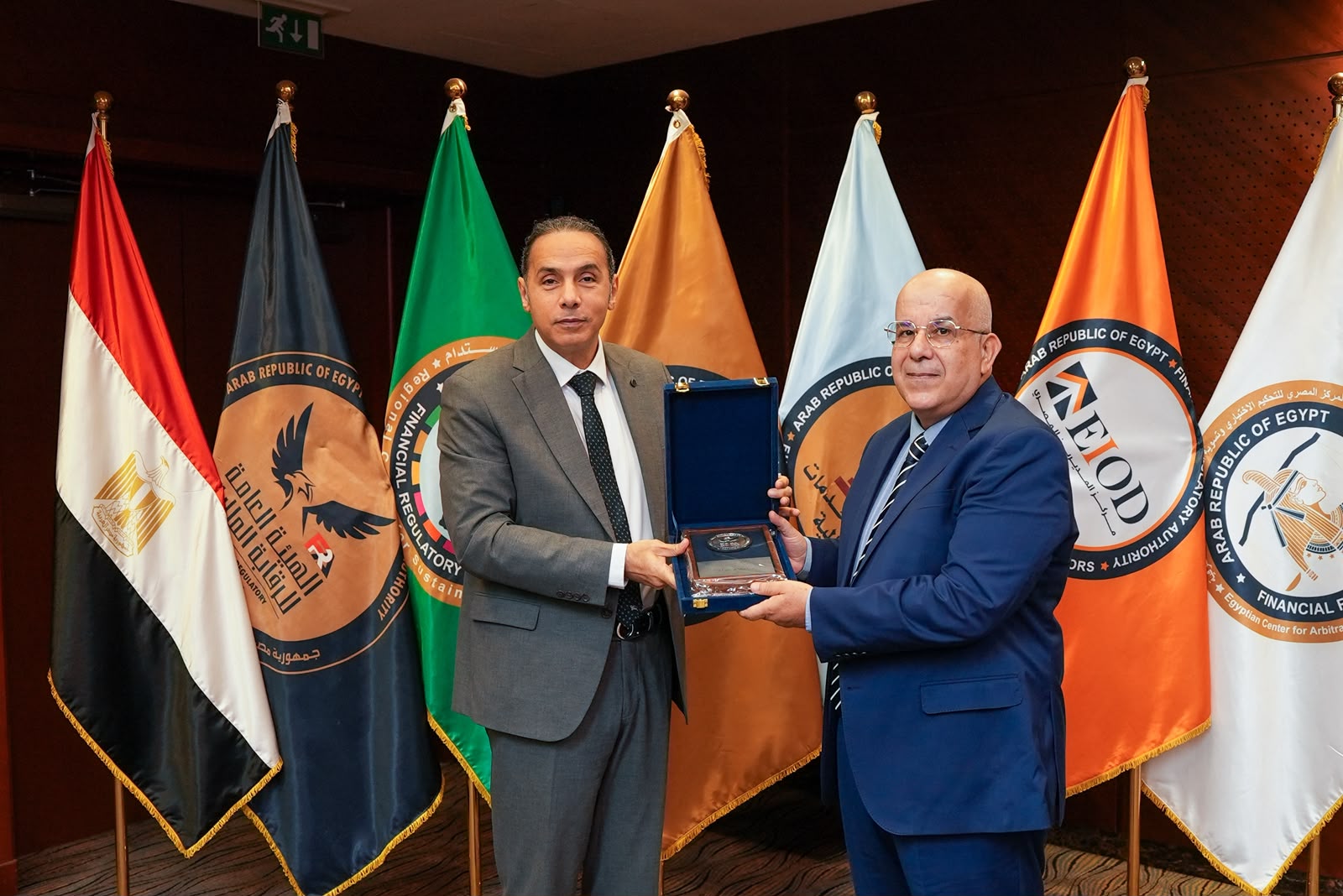
Dr. Islam Azzam, Chairman of the Financial Regulatory Authority (FRA), received Mr. Mahmoud El Montasser Mansour, Executive Director General and Founder of the Microfinance Supervisory Authority (MSA) of the sisterly Republic of Tunisia, accompanied by Dr. Rehab Taha, Assistant FRA Chairman. The meeting aimed to foster joint cooperation and exchange regulatory and organizational expertise in non-bank finance, thereby driving market development, efficiency, and sustainability.
The visit comes as part of the Tunisian delegation’s interest in closely examining the legislative and regulatory frameworks governing medium, small, and microenterprise (MSME) financing in Egypt, particularly in light of the chronological proximity of regulating this sector in both countries.

At the outset of the meeting, Dr. Islam Azzam welcomed the Tunisian officials to their second home, Egypt, emphasizing FRA’s deep pride in cooperating with sisterly Arab and African countries. He noted that knowledge sharing and capacity building remain top priorities for the Authority, alongside showcasing Egypt’s institutional and regulatory experience in governing non-bank financial activities while benefiting from the experiences of other countries.
He explained that non-bank project financing stands at the forefront of the FRA’s regulated sectors, touching the vast majority of citizens. This is due to its direct link to advancing financial inclusion—a core objective of Egypt’s Vision 2030 and the state’s strategy to boost the national economy—and its targeted positive impact on vulnerable segments, underscoring its vital role in sustainable economic and social development.
FRA Chairman added that Egypt has witnessed remarkable growth in financing balances of medium, small, and micro enterprises, collectively exceeding EGP 101 billion in the second quarter of this year (2026), benefiting approximately 3.5 million male and female citizens across roughly 4,400 licensed branches of companies, associations, and institutions allover Egypt.
Dr. Islam Azzam underscored that FRA has placed paramount importance recently on enhancing the quality of beneficiaries’ financing experience—especially in microfinance—by tightening client creditworthiness standards to reduce default rates, ensuring information clarity, safeguarding data privacy, encouraging entities to innovate new products that meet client needs, and guaranteeing access to effective grievance and complaint mechanisms to verify the genuine impact of financing on clients’ lives and economic activities.
FRA Chairman highlighted several recently issued resolutions aimed at regulating collection activity to prevent abuses, tightening customer identity verification procedures, bolstering the Authority’s capacity for early risk detection and mitigating individual default risks, improving the financial solvency of active entities, and encouraging the innovation of fintech-driven products to keep pace with market developments and shifting client conditions. These measures aim to expand access to new beneficiaries, particularly in poor and remote areas, in parallel with ongoing awareness-raising efforts through cooperation with various governmental entities.
For his part, Mr. Mahmoud El Montasser Mansour, Director General of Tunisia’s Microfinance Supervisory Authority, outlined the evolution of the sector since its regulation in Tunisia in 1999 across associations, followed by the sector’s restructuring in 2011 to subject commercial microfinance institutions to oversight. He also highlighted the Authority’s role since 2012 in regulating pricing and monitoring financing costs, alongside the latest measures adopted last year, including reviewing pricing for certain products offered by the 7 licensed microfinance companies and 289 licensed microcredit associations.
Mansour noted that more than 856,000 clients currently benefit from microfinance in Tunisia, and that the past year (2025) recorded financing disbursements of approximately 2.7 billion Tunisian Dinars (EGP 47.1 billion), reflecting the sector’s continuous expansion as the number of financing transactions exceeded 524,000.
The meeting also shed light on development of financial products and diversification of financing tools, while addressing both sides’ experiences in digital transformation, fintech applications, the integration of artificial intelligence into regulatory tools, and modern mechanisms for risk management, compliance, and consumer protection to enhance the efficiency of areas of mutual interest.
Tags: Tunisia's Microfinance Supervisory Authority, Dr. Islam Azzam Chairman of the Financial Regulatory Authority, Dr. Rehab Taha Assistant to Chairman, Financial Regulatory Authority (FRA) Last modified: October 15, 2026