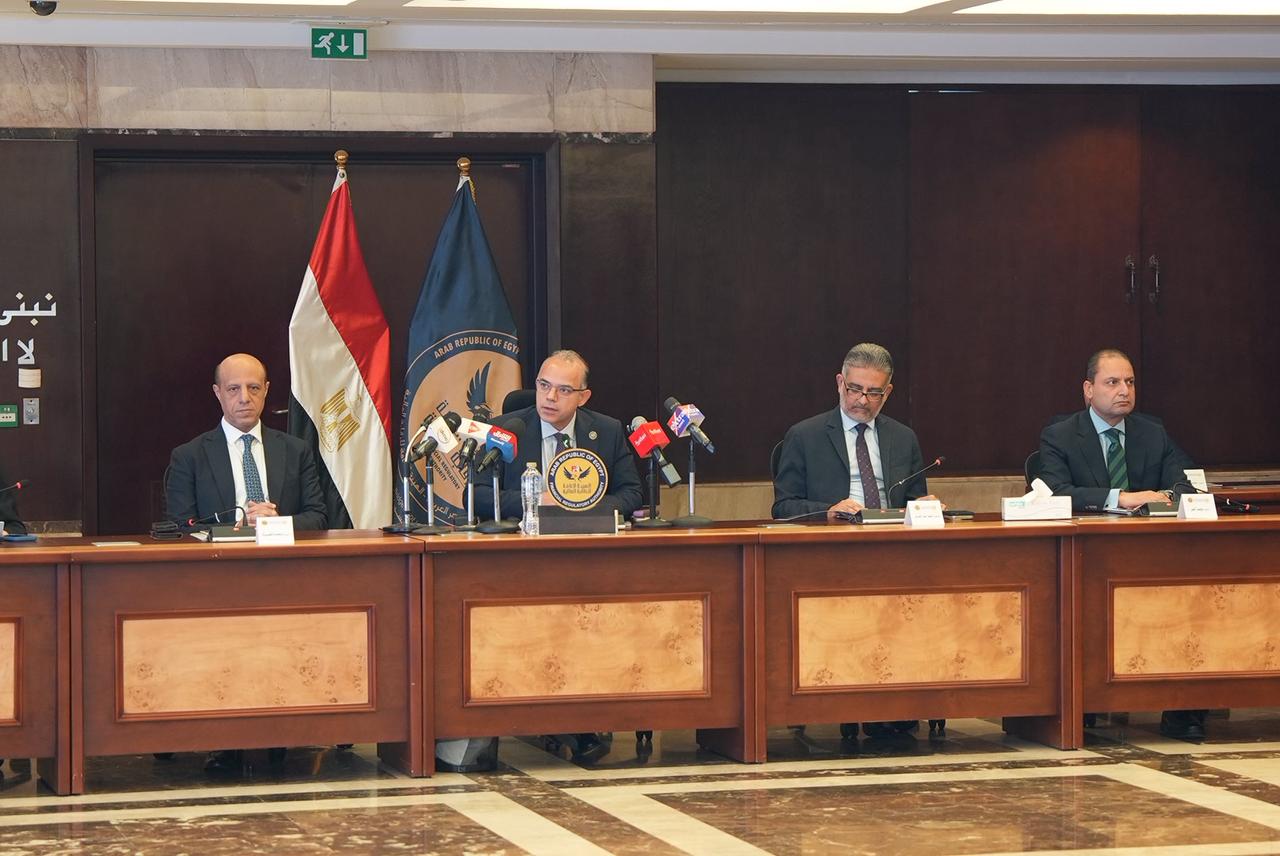
Dr. Mohamed Farid – FRA Chairman:
- 2025 is the starting point for reaping the fruits of reform… and there is no magic wand for development.
- Fintech is the common denominator in developing non-banking sectors.
- Listening to the market is the basis for modernization… and development is not just “ink on paper.”
- Institutionalizing innovation through the Regulatory Sandbox.
- 73 Fintech companies… a flexible regulatory model that supports innovation.
- Unprecedented increase in the number of new investors in the Egyptian Exchange (EGX).
- Developing listing rules and launching innovative investment mechanisms.
- Protecting investor rights by updating voluntary delisting rules.
- Real Estate Crowdfunding: opening new horizons for fractional investment.
- FRA continues its journey of building non-banking markets that create investment opportunities and enable our people to benefit from non-banking services.
- The regulations issued by the Authority are not just “ink on paper”; we notice a tangible impact, actual empowerment, and real opportunities for companies and individuals.
- We continue to monitor the implementation of all regulatory decisions and measure their impact to maximize benefits for citizens and the economy.
The Financial Regulatory Authority (FRA) released its annual harvest report, titled “From Regulation to Empowerment.” This report documents a paradigm shift in Egypt’s non-banking financial sector, where regulatory frameworks have evolved from static rules into dynamic engines for economic growth and market depth.
Dr. Mohamed Farid stated that 2025 was a true turning point in reaping the fruits of FRA’s policies from 2022 until now. He stressed that there is no magic wand in the reform process; development is a cumulative process requiring a clear vision, disciplined execution, and continuous interaction with market stakeholders.
FRA Chairman underscored that technology has become the foundational pillar for growth across all non-banking financial sectors. He clarified that FRA views digital transformation not as a mere procedural update, but as a fundamental engine of empowerment. This strategic shift to ‘Smart Regulation’ translates directly into enhanced market efficiency, reduced operational costs, and unprecedented ease of access for citizens seeking financial services.
Dr. Mohamed Farid explained that FRA was keen to listen to industry feedback while developing and updating market rules. He emphasized that these updates were the result of open discussions with companies and institutions. The goal is to balance supporting new ideas with protecting investors and keeping the markets stable.
FRA Chairman also noted that FRA has formalized innovation by launching the “Regulatory Sandbox.” This platform acts as a secure space to receive, test, and develop new ideas. It allows companies to try out innovative business models in a safe environment before they are fully launched in the market.
These initiatives have successfully established a robust ecosystem of 73 Fintech companies. Of these, 45 are operational, while 28 are in the final stages of licensing. This growth is the direct result of a flexible regulatory framework designed to nurture innovation while staying aligned with global financial trends.
Furthermore, FRA Chairman emphasized that E-KYC (Electronic Know Your Customer) became a practical reality, with 354,000 digital verification processes executed in 2025. Males accounted for 85% of these, while females accounted for 15% , noting that these operations were distributed as follows: 63% for financing activities, 28% for the capital market, and 9% for the insurance sector.
Digital transformation acted as a key growth driver, facilitating the execution of 189,000 electronic contracts in 2025, along with 67,000 contracts across diverse financing activities. This digital shift has effectively minimized the turnaround time and operational costs associated with financial services, while significantly broadening the reach to a wider range of beneficiaries.
Simultaneously, the Egyptian capital market achieved a historic milestone, with total trading volumes surging to EGP 15.7 trillion, representing an increase from EGP 2.3 trillion in 2024. Treasury bills and bonds anchored this growth, which dominated with EGP 13.1 trillion, while equity trading contributed a robust EGP 2.4 trillion.
He added that this major surge coincided with 299,000 new investors joining the Egyptian Exchange (EGX) within a year. This reflects growing investor confidence in the market as a result of the reform and regulatory policies adopted by the Authority.
FRA Chairman noted that the Authority has continuously refined listing rules to facilitate the introduction of new financial instruments. Key milestones include the activation of Special Purpose Acquisition Companies (SPACs)—highlighted by the EGP 3 billion ‘Catalyst’ and ‘Hassan Allam Investment’ entities. Furthermore, the market witnessed the success of the first-ever reverse merger (EGYTRANS’s acquisition of NOSCO), effectively boosting capital to EGP 224.9 million. This was accompanied by the strategic listing of ‘valU’ through an innovative dividend-in-kind distribution from its parent company.
Dr. Farid emphasized that the Authority has prioritized shareholder protection by modernizing the voluntary delisting rules. These updates were specifically prepared to enforce equitable treatment and safeguard the interests of minority shareholders. A prime example of this regulatory oversight is ‘Ezz Steel’ case, where FRA’s intervention successfully protected hundreds of millions of pounds in shareholder value.
Dr. Mohamed Farid stated that gold investment funds attracted approximately 324,000 investors, with total investments reaching EGP 5.145 billion by the end of December 2025. This was accompanied by the launch of the first regulated Voluntary Carbon Market to support sustainability and carbon reduction efforts.
He added that the Authority granted the EGX its first license to trade futures contracts, enhancing hedging tools and risk management within the capital market.
FRA Chairman confirmed that non-banking financing sectors continued their developmental role in 2025. The SME and Microfinance sector injected EGP 105.3 billion serving 4.2 million beneficiaries. Meanwhile, financial leasing recorded EGP 147.2 billion, real estate finance reached EGP 24.3 billion (a 51.9% growth rate), consumer finance hit EGP 61.3 billion, and factoring reached EGP 64.9 billion.
Dr. Mohamed Farid continued by explaining that 2025 witnessed a strong launch for “Real Estate Crowdfunding” as an innovative investment solution. He revealed that the Authority received 32 diverse applications, including 21 companies seeking licenses for this activity and 11 companies for the promotion and underwriting of real estate investment funds.
Dr. Farid highlighted that these regulatory initiatives have already facilitated the approval of five pioneering firms, with three having secured full license. Most notably, 2025 marked the debut of Egypt’s first regulated digital platform for fractional real estate investment. This milestone is designed to democratize property ownership, offering secure, accessible, and transparent investment alternatives that suit all segments of society.
He added that insurance sector witnessed a significant boom in 2025, with total premiums rising to EGP 110.1 billion (a 30.6% growth rate). This comprised EGP 61.9 billion for life insurance and EGP 48.2 billion for property insurance, while paid claims reached EGP 46.7 billion.
He explained that the activation of the Movable Collateral Registry contributed to the registration of assets worth EGP 3.2 trillion through 145,000 registrations, enhancing financing opportunities for companies.
He pointed out that 2025 marked the launch of the financial derivatives market as a pivotal step in developing the Egyptian capital market. The Authority issued the complete regulatory framework for trading derivatives, futures, and options, aligning with international best practices and enhancing market efficiency.
Dr. Mohamed Farid concluded his remarks by emphasizing that 2025 harvest reflects FRA’s success in building a more efficient and competitive non-banking financial market based on digital transformation, market dialogue, institutionalizing innovation, and protecting participants’ rights, all of which support sustainable economic growth.
Tags: Dr. Mohamed Farid, Dr. Mohamed Farid, Dr. Mohamed Farid, Dr. Mohamed Farid, Dr. Mohamed Farid, Dr. Mohamed Farid, Dr. Mohamed Farid, Dr. Mohamed Farid, Dr. Mohamed Farid, Dr. Mohamed Farid, Dr. Mohamed Farid, Dr. Mohamed Farid, Dr. Mohamed Farid, Dr. Mohamed Farid, Dr. Mohamed Farid, Dr. Mohamed Farid, Dr. Mohamed Farid, Dr. Mohamed Farid, Dr. Mohamed Farid, Non-banking Sectors, Listing Rules, Investor Rights, Voluntary Delisting, Fractional Investment, Crowdfunding Last modified: March 24, 2026